


Coin lockers at Disneyland! Also what to do when you don't have a place or space to leave your belongings!
2024/11/25

 2026/09/16
On the Oga Peninsula in Akita Prefecture, rugged mountains meet the Sea of Japan. Here, an ancient local tradition comes to life each winter in the form of Namahage—masked figures who descend from the mountains as visiting deities.
On the Oga Peninsula in Akita Prefecture, rugged mountains meet the Sea of Japan. Here, an ancient local tradition comes to life each winter in the form of Namahage—masked figures who descend from the mountains as visiting deities.
“Are there any bad children here? Are there any crying children here?”
In February, I experienced the Namahage Sedo Festival, one of Oga’s most distinctive winter events. I also stayed at Moricho Ryokan, a historic inn that reopened in April 2025, where I unwound in a private sauna created by converting an entire traditional storehouse.
Table of Contents of This Article
Open Table of Contents ▼
Namahage Sedo Festival

Namahage
If you're visiting Oga, it's worth getting to know what Namahage really are. Although their masks and fierce appearance may look frightening, Namahage have a much deeper cultural significance.
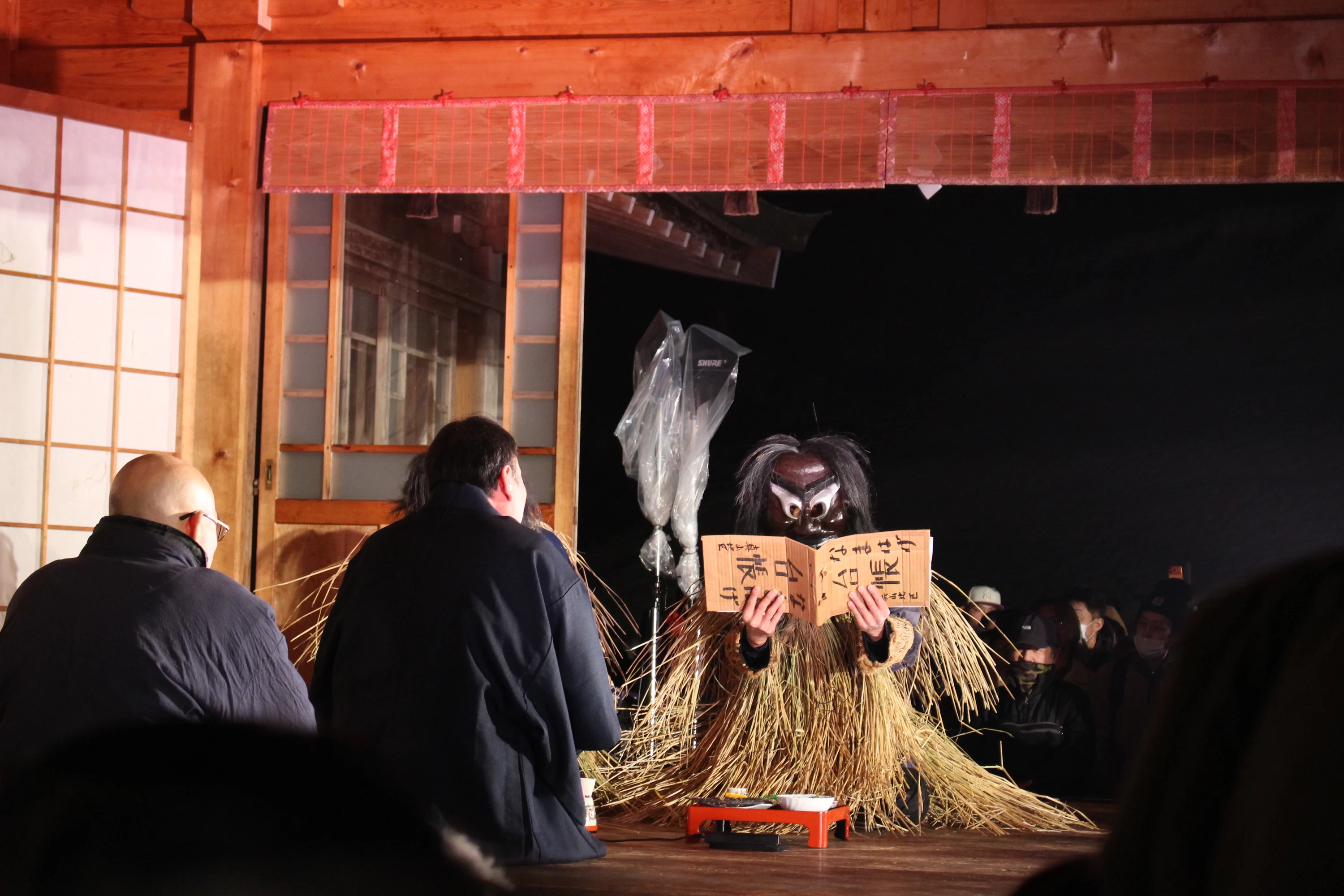
First of all, Namahage are not demons or monsters. They are raiho-shin, or visiting deities, who are traditionally believed to descend from the mountains once a year to bring blessings to local communities, including good health, a good harvest, and abundant catches at sea.
With their horns, masks, and fierce expressions, they may look frightening, but they are revered figures rather than evil spirits.
In the harsh winters of Oga, people traditionally spent long hours warming themselves by the irori, a sunken hearth. Red patches that could develop on their hands and feet from the heat were known as namomi and were considered a sign of laziness.
Namahage were said to remove these patches as a warning against laziness, while also bringing wishes for good health and prosperity in the coming year. The name Namahage is believed to come from namomi-hagi, meaning “removing namomi.”
In 2018, the Namahage tradition was inscribed on UNESCO's Intangible Cultural Heritage list as part of “Raiho-shin, ritual visits of deities in masks and costumes.”
This recognition reflects the importance of Namahage as a cultural tradition that remains deeply rooted in local communities.
The traditional Namahage visit takes place on New Year's Eve, when Namahage go from house to house in local communities. They do not simply burst into people's homes. A person known as a sakidachi goes ahead to ask the household for permission, and the family prepares to receive the Namahage formally.
The Namahage then exchange words with the head of the household, sometimes sternly questioning them about their behavior during the year. They are also traditionally offered food and sake. Despite their frightening appearance, the visit follows a formal and highly ceremonial tradition.
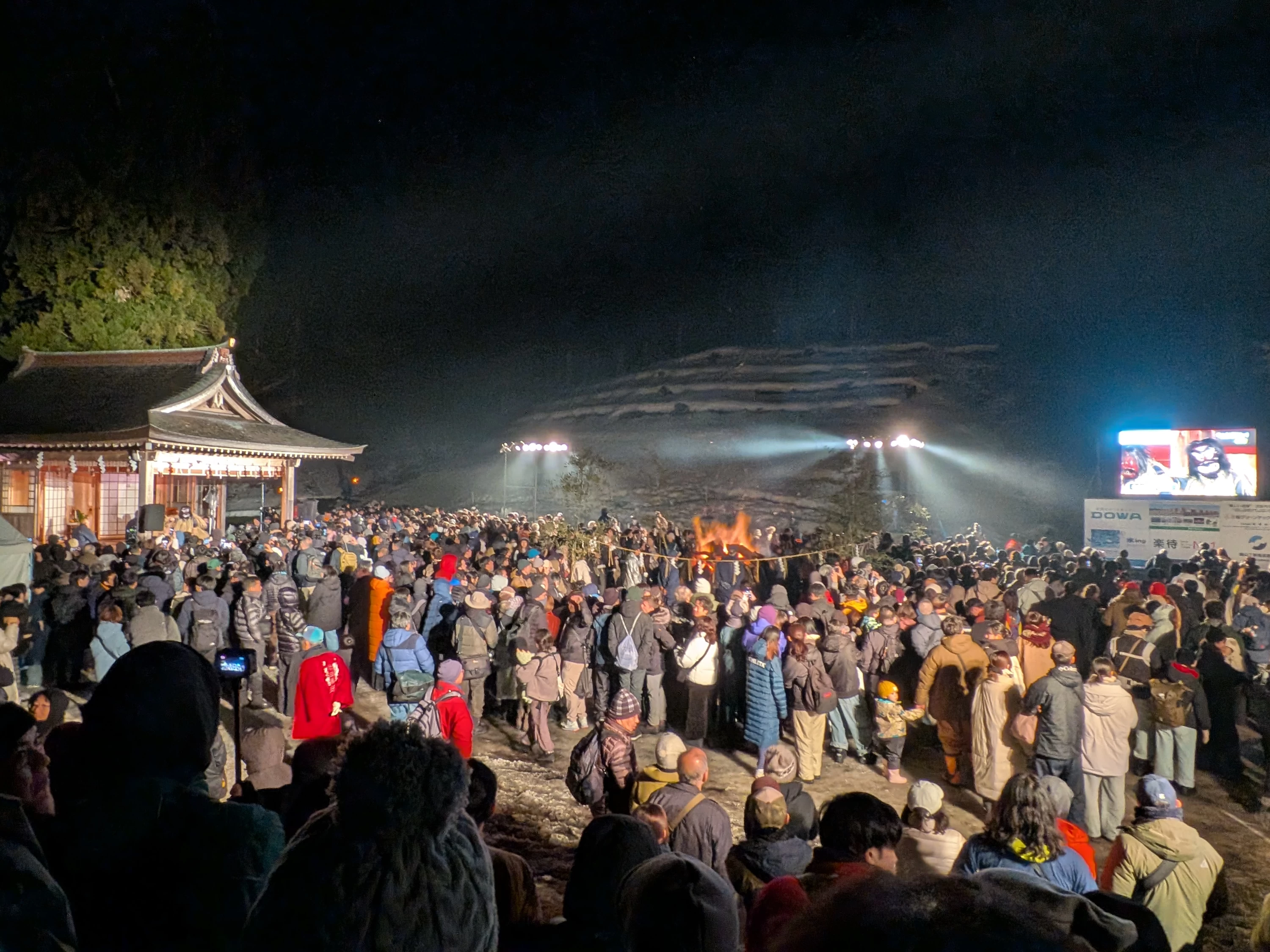
Held on the second Friday, Saturday, and Sunday of February each year, the Namahage Sedo Festival is one of Oga’s biggest winter events. It began in 1964 as a combination of the Shinto Saito-sai ritual at Shinzan Shrine and traditional Namahage customs from local communities.
Shinzan Shrine
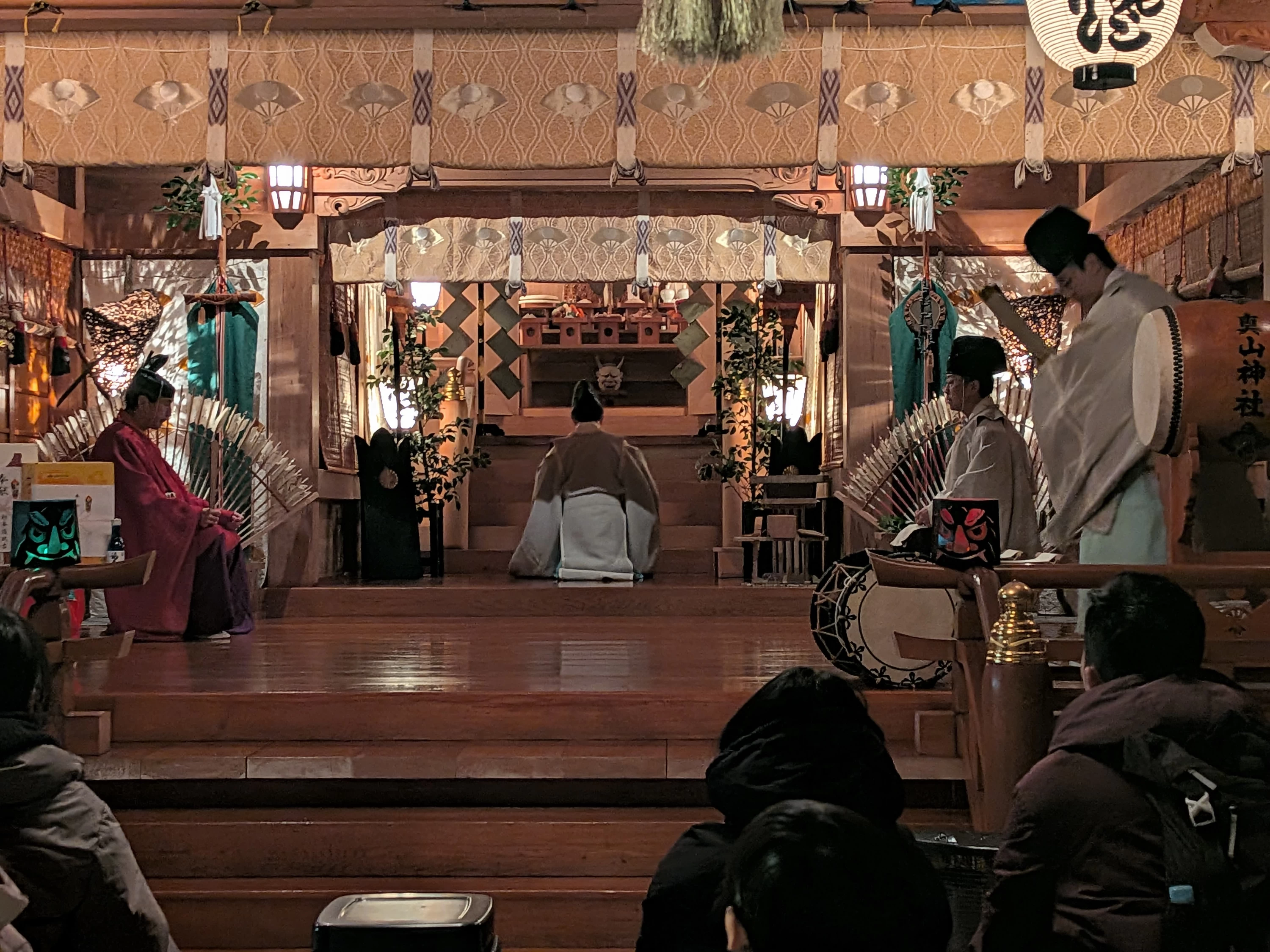
Shinzan Shrine
Shinzan Shrine is a historic shrine on Mount Shinzan, which has long been revered as a sacred site of Shugendo, a tradition of mountain asceticism. The shrine is believed to have been established in the late Heian period (late 11th to late 12th century).
The festival begins with a ritual in which young men receive Namahage masks and take on the role of the visiting deities. A Shinto priest performs a ritual to imbue the masks with the spirit of Namahage, after which the young men disappear into the mountain.
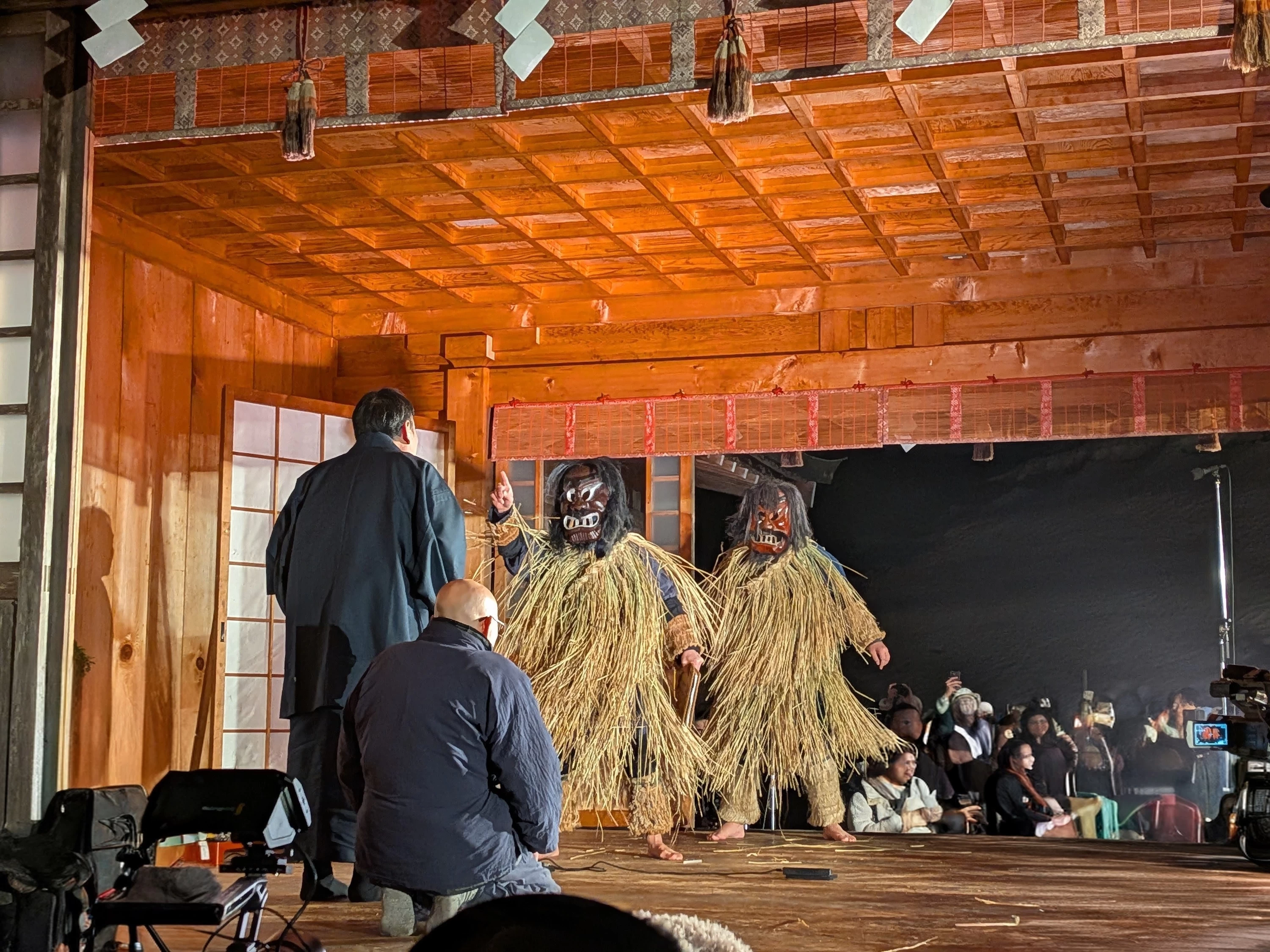
Reenacting the Namahage House Visits
A traditional Namahage visit, normally performed at homes on New Year’s Eve, is reenacted at the Kaguraden (sacred dance hall). The exchange between the Namahage and the head of the household is conducted in Oga’s distinctive local dialect. Their questioning can be stern at times, but it can also be humorous, giving the audience a glimpse into how this traditional custom unfolds.
The Namahage Dance was choreographed by Baku Ishii, a renowned Japanese dancer and choreographer. The Namahage dance energetically around the sedobi fire, creating a powerful and dynamic performance.
Taiko Drumming
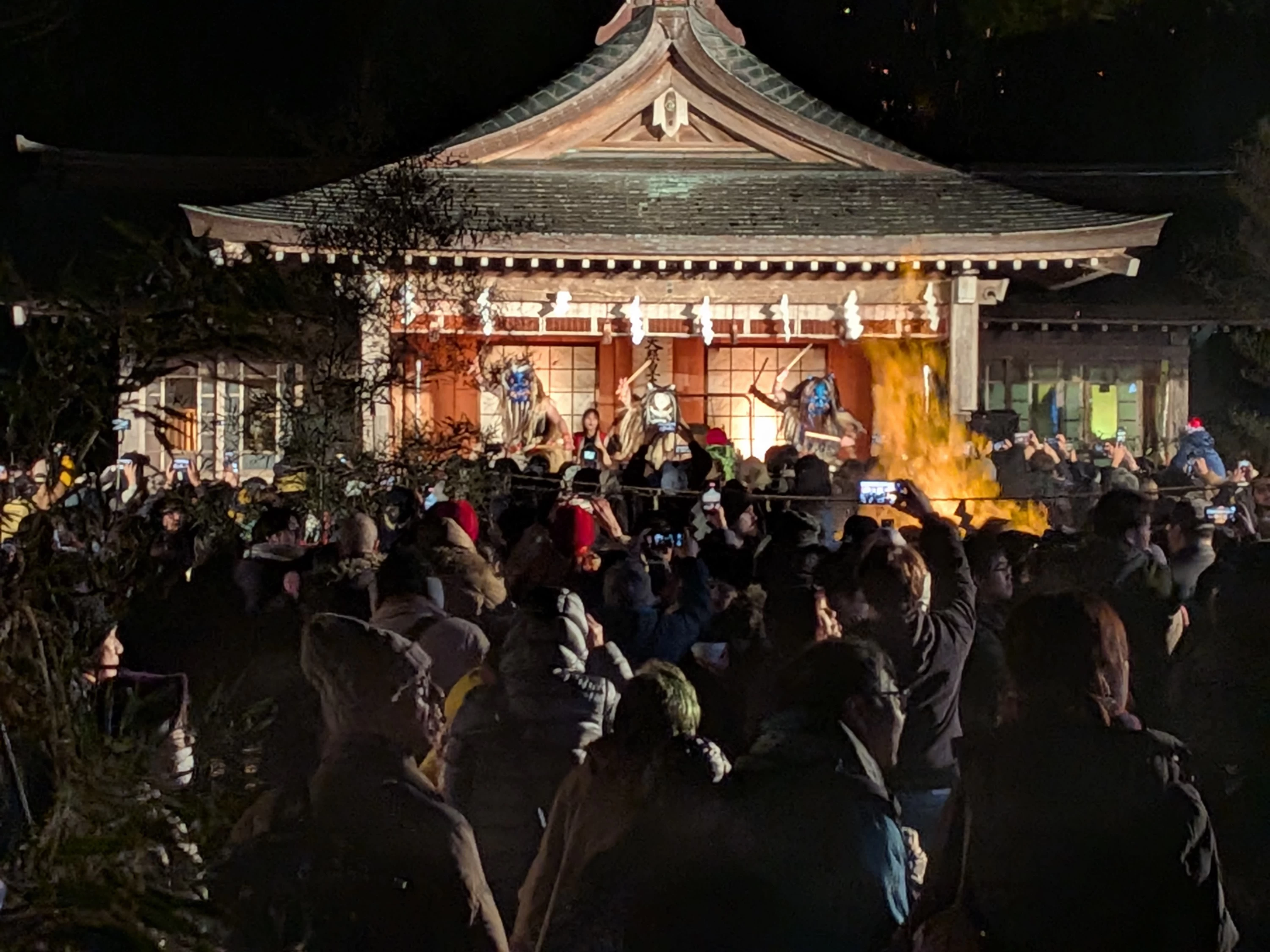
The deep sound of taiko drums reverberates throughout the grounds as the performance builds excitement among the crowd.
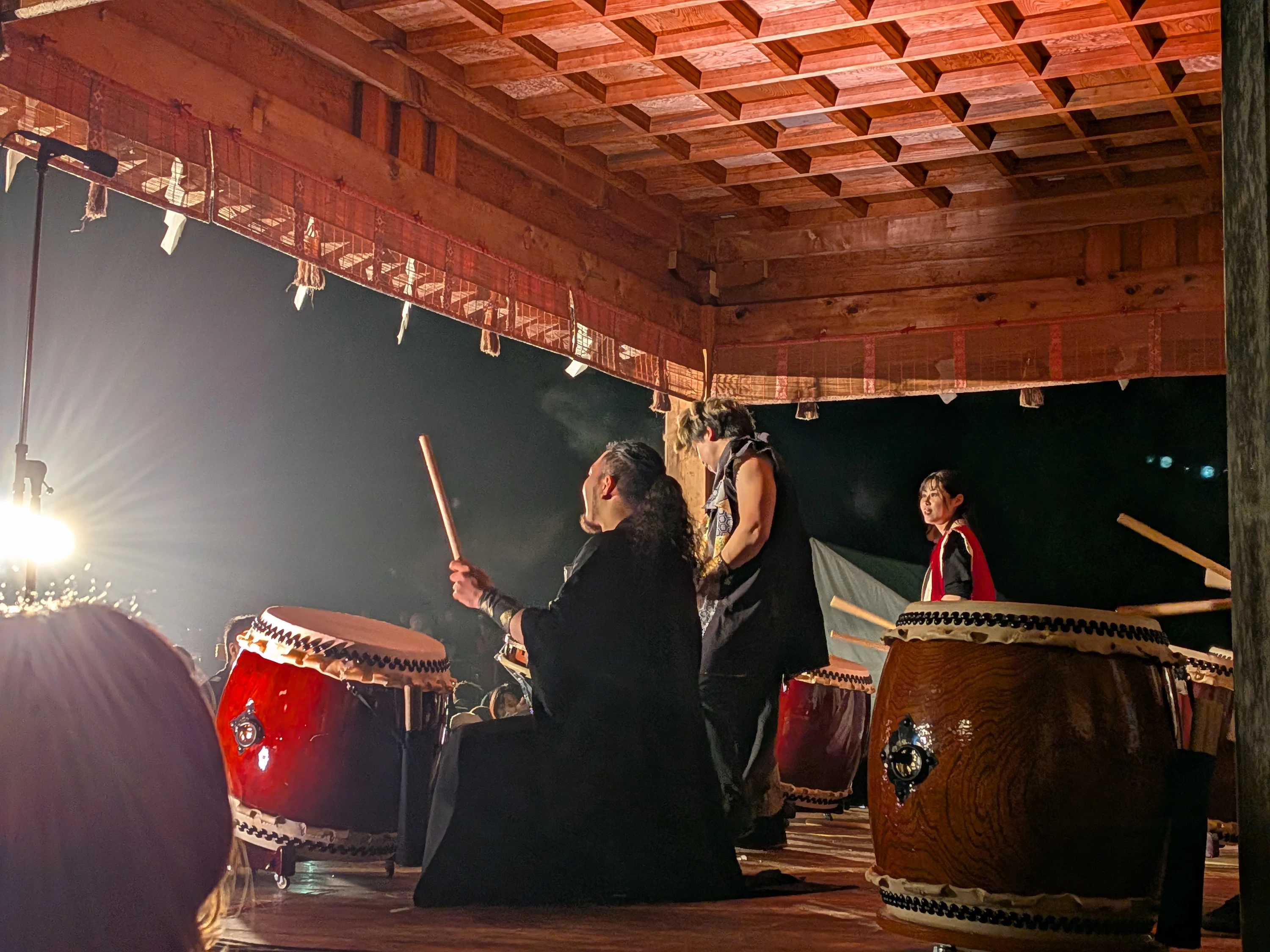
Taiko Drumming
The drummers continue performing through the latter part of the festival, this time without their Namahage masks.
The festival's highlight comes when the Namahage descend from the dark mountain carrying flaming torches. One by one, they make their way down through the snow, their torches appearing and disappearing among the trees.
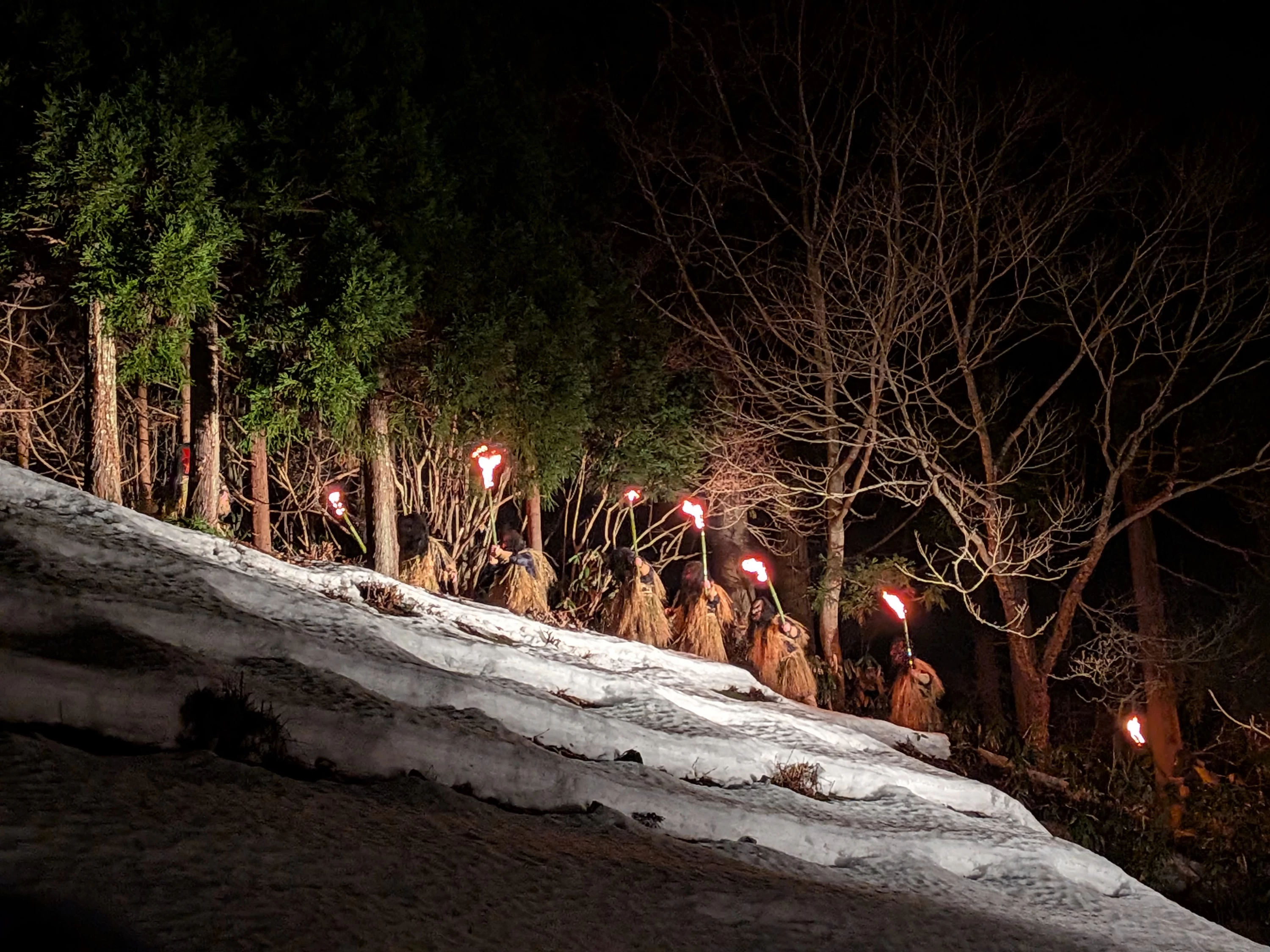
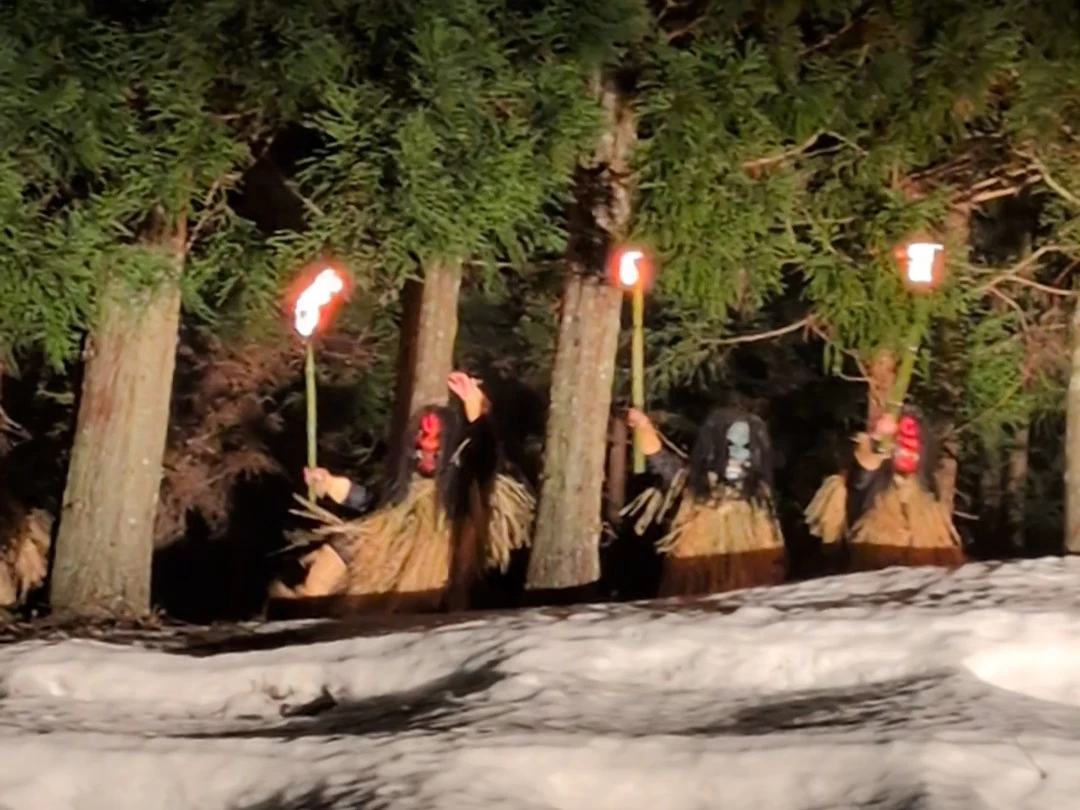
At times, the Namahage themselves disappear from view, leaving only the flickering flames visible in the darkness.
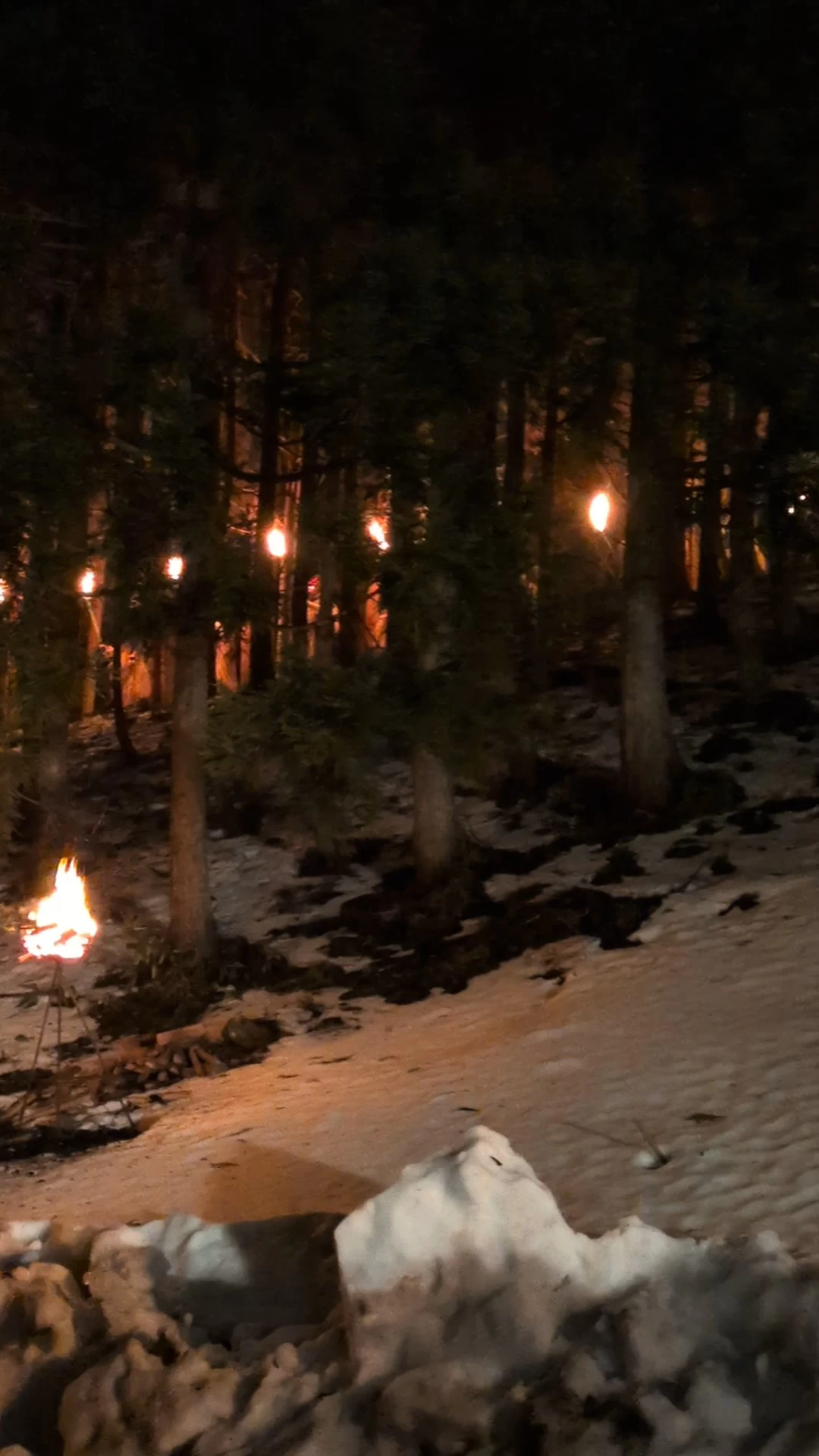
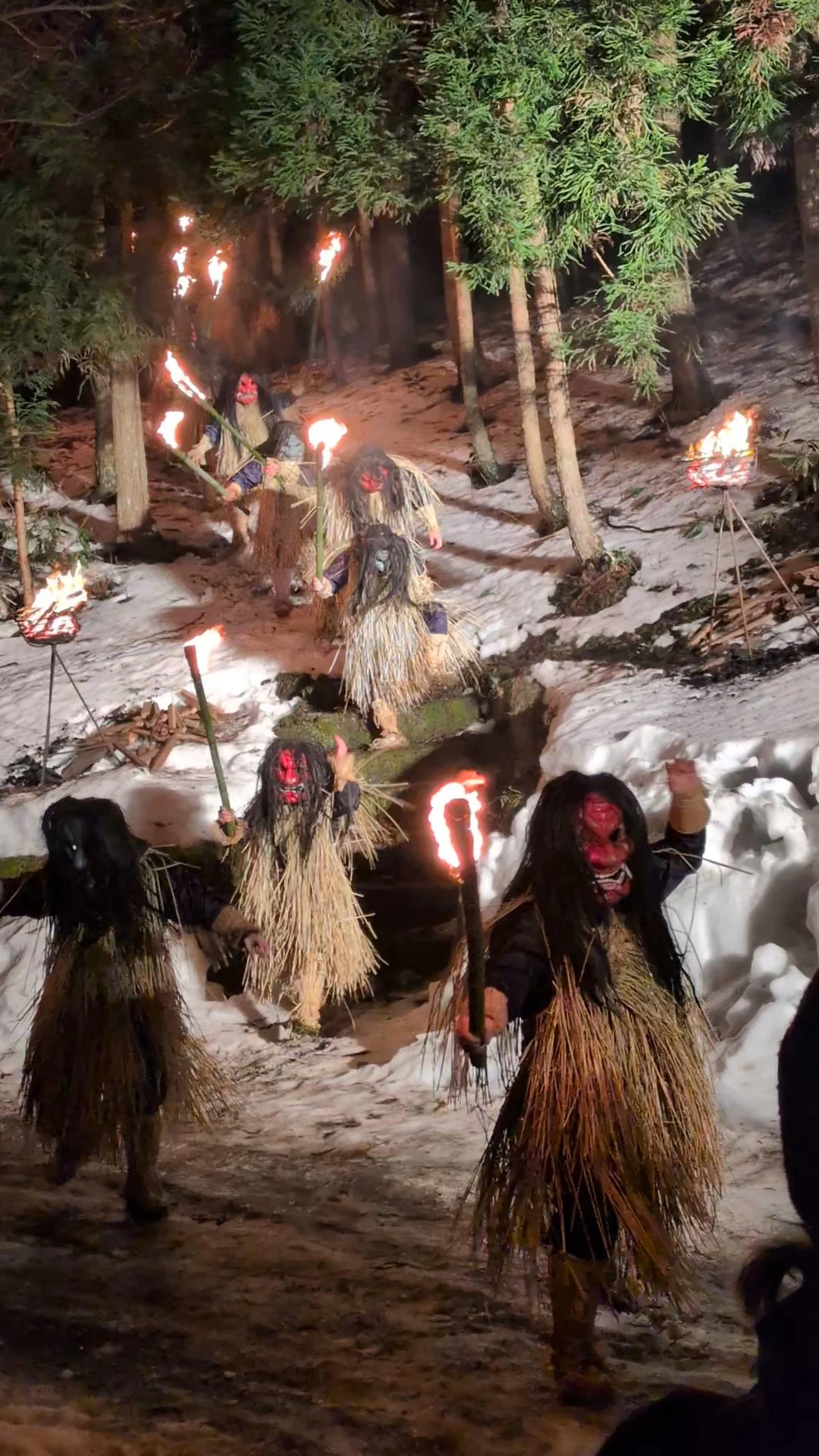
As they emerge again and descend toward the shrine in a procession, all eyes turn toward the mountain.
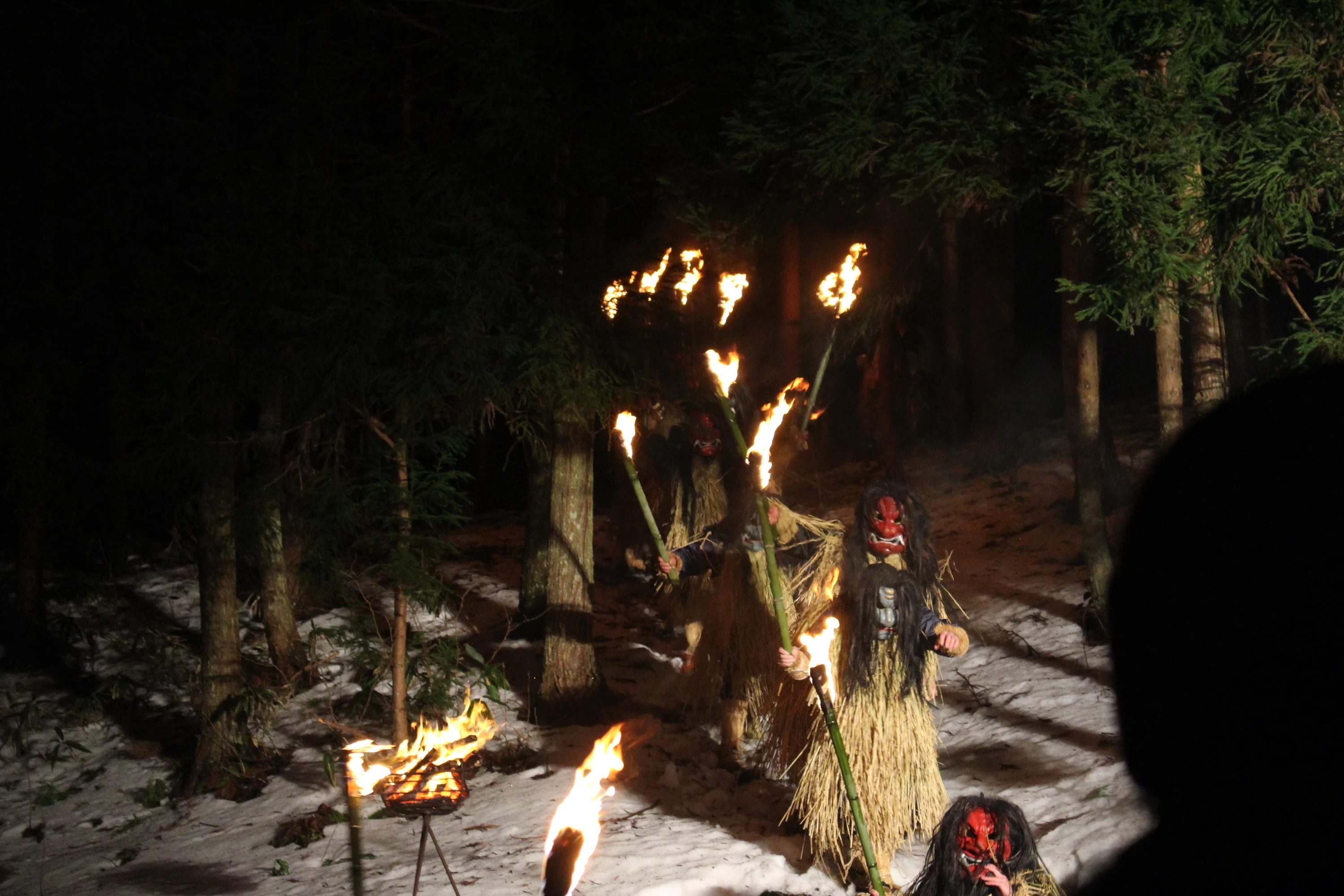
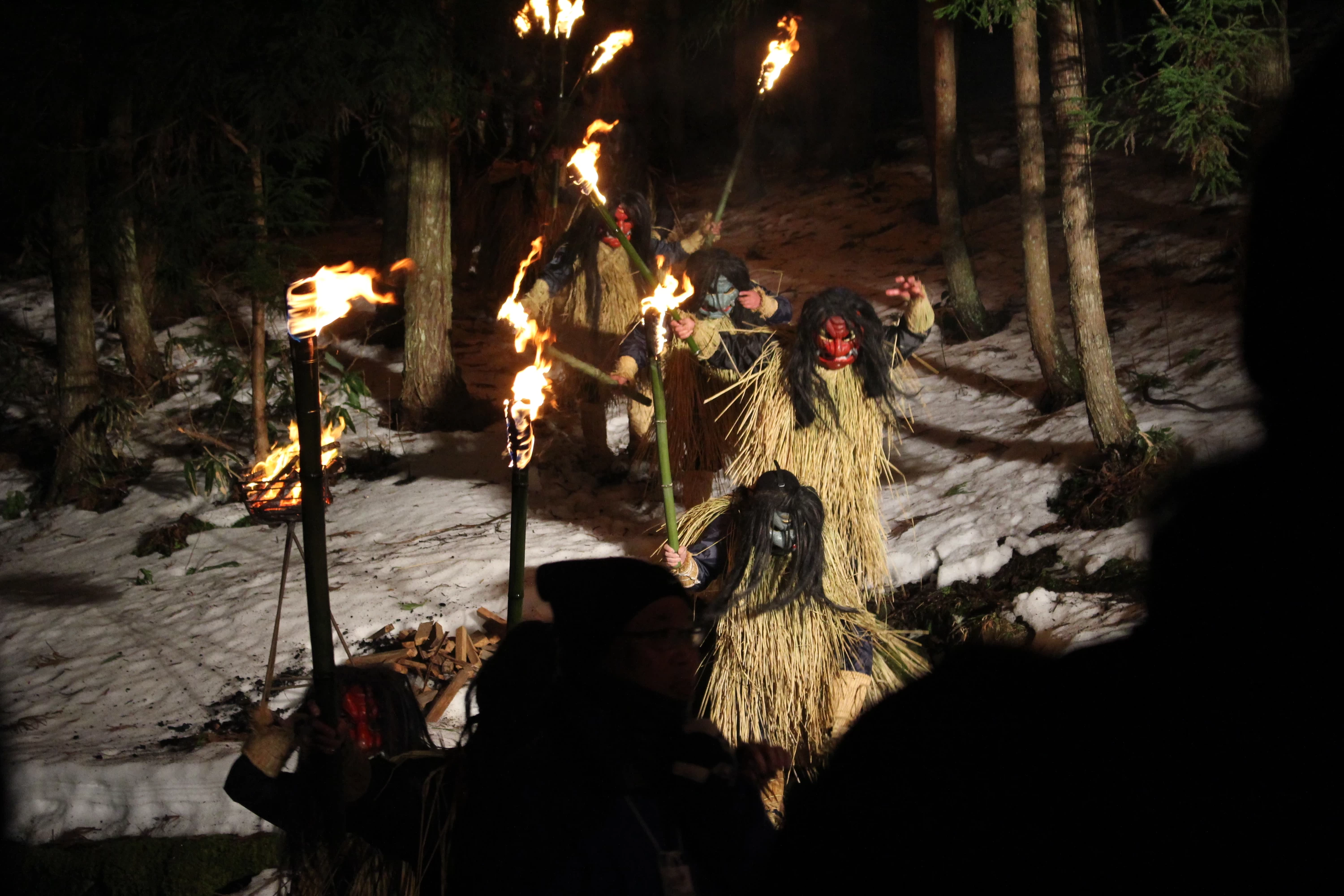

Finally, the Namahage enter the festival grounds and walk among the crowd. This is one of the best opportunities to see them up close. Some Namahage move slowly through the crowd, while others make their way forward with considerably more force, sometimes bumping into spectators.

The photo here captures the moment just before one of them reaches me.
Namahage Museum
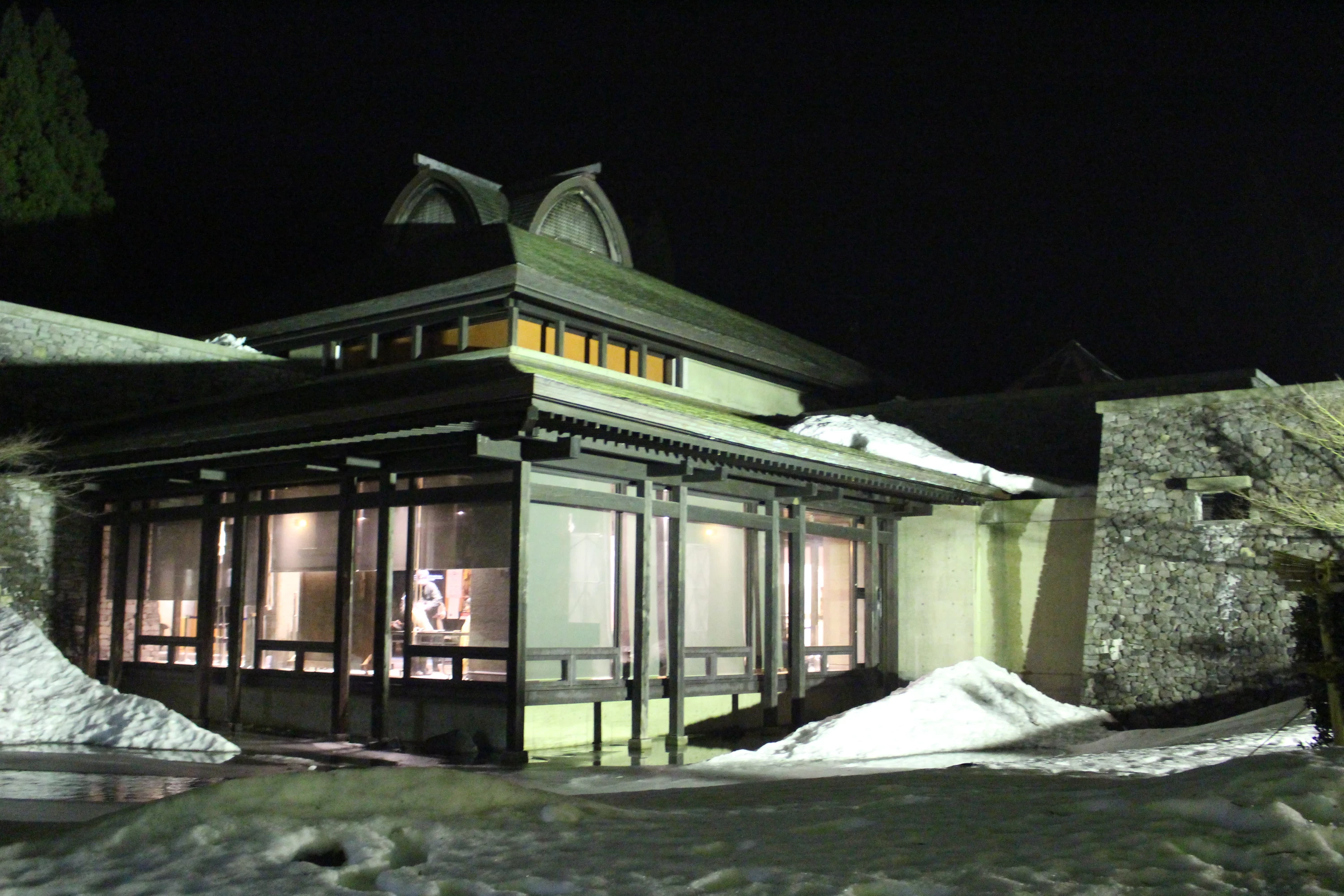
After the excitement of the festival, be sure to visit the Namahage Museum. One of the most interesting things to discover here is just how differently Namahage can look.

The museum's Namahage Exhibit features more than 150 masks that were actually used in around 60 communities across Oga City. The masks vary greatly from community to community, with no single look defining Namahage.
Some are heavy wooden masks, while others are brightly painted. Some have horns, while others do not, and some have exposed teeth that give them a surprisingly humorous appearance. The materials, shapes, and facial expressions vary from community to community.
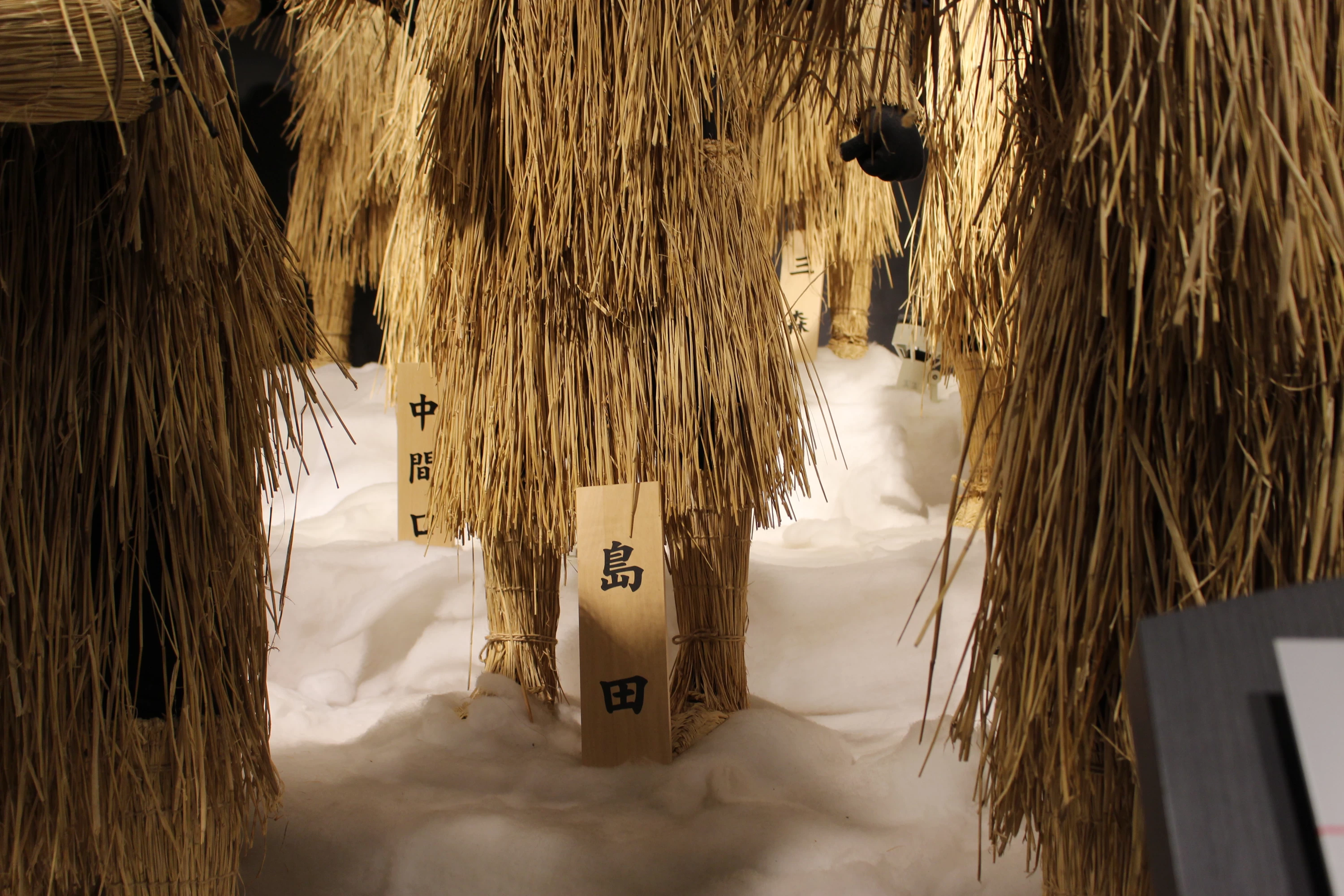
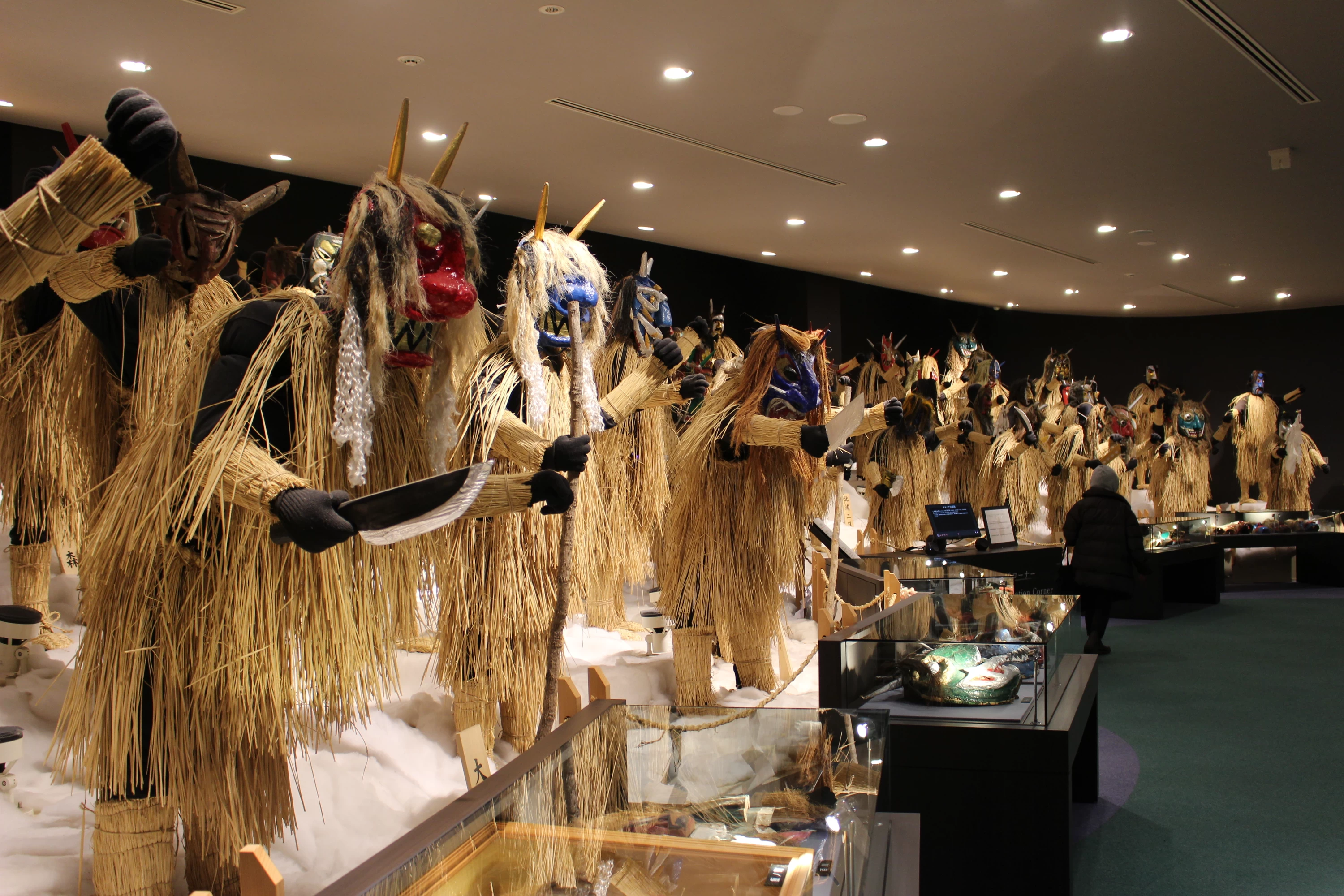
This is a reflection of the way each community has preserved its own traditions and style. Finding your favorite Namahage can be part of the fun of visiting the museum.
Unlike the festival, which takes place only once a year, the Namahage Museum is open year-round. In addition to masks and costumes from different communities, the museum also screens films about Namahage on large screens, offering a chance to learn more about the tradition.
The Oga Shinzan Folklore Museum next door is also worth visiting, especially if you want to see a traditional Namahage house visit reenacted.
Namahage Museum Oga Shinzan Folklore Museum

Moricho Ryokan
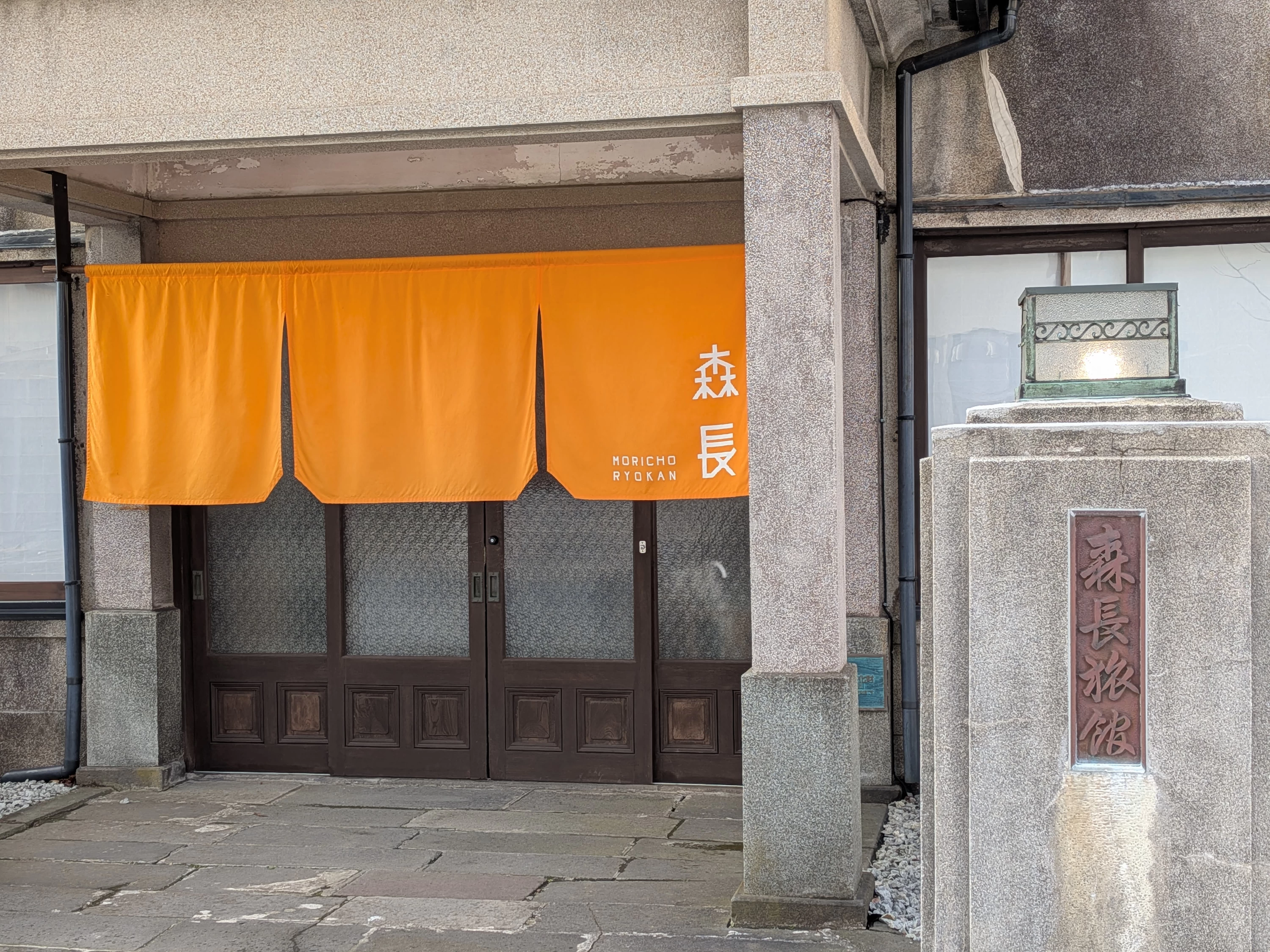
After the energy and excitement of the Namahage festival, I headed to Moricho Ryokan in the Funakawa area of Oga for some quiet time and a chance to unwind.
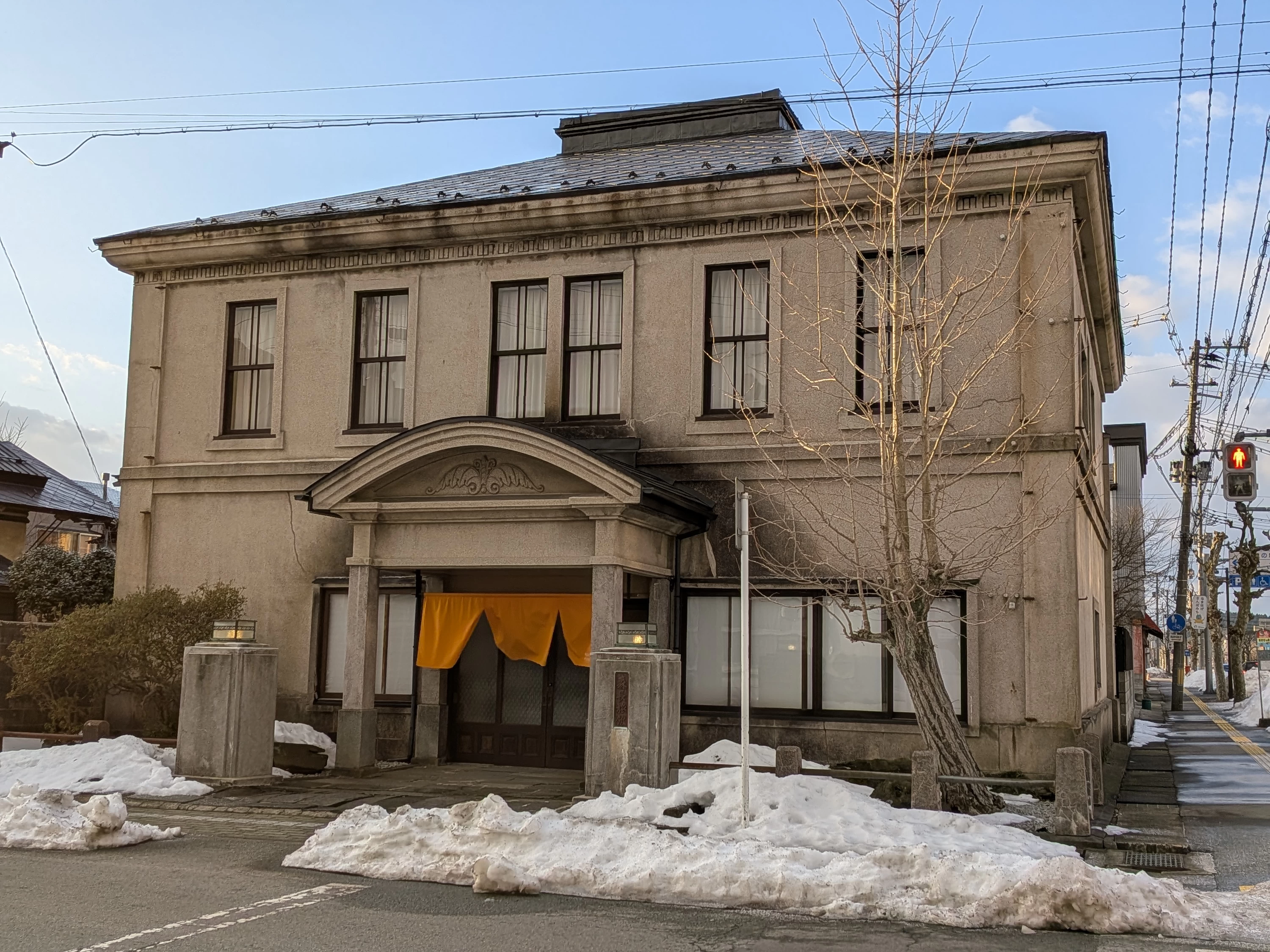
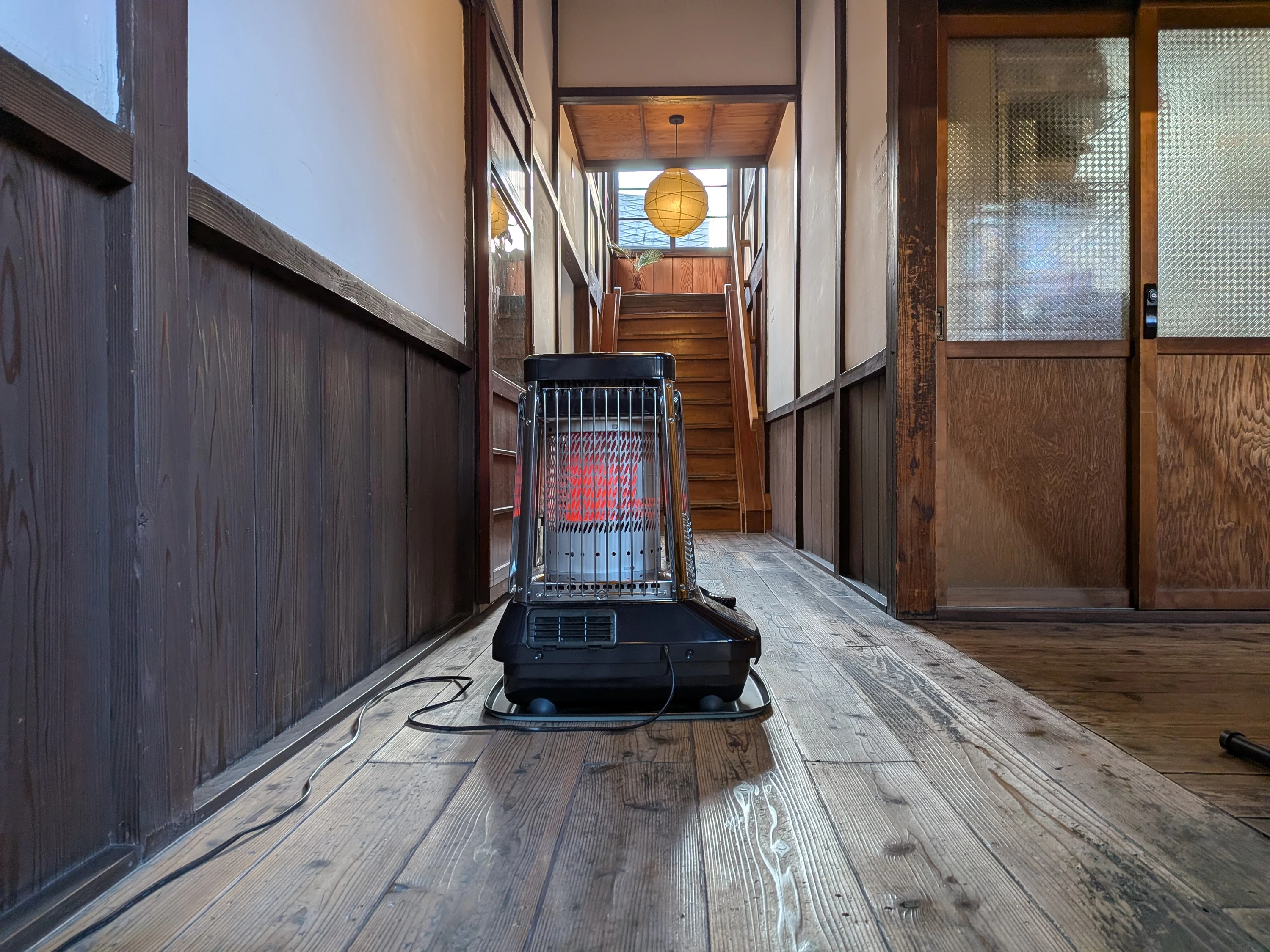
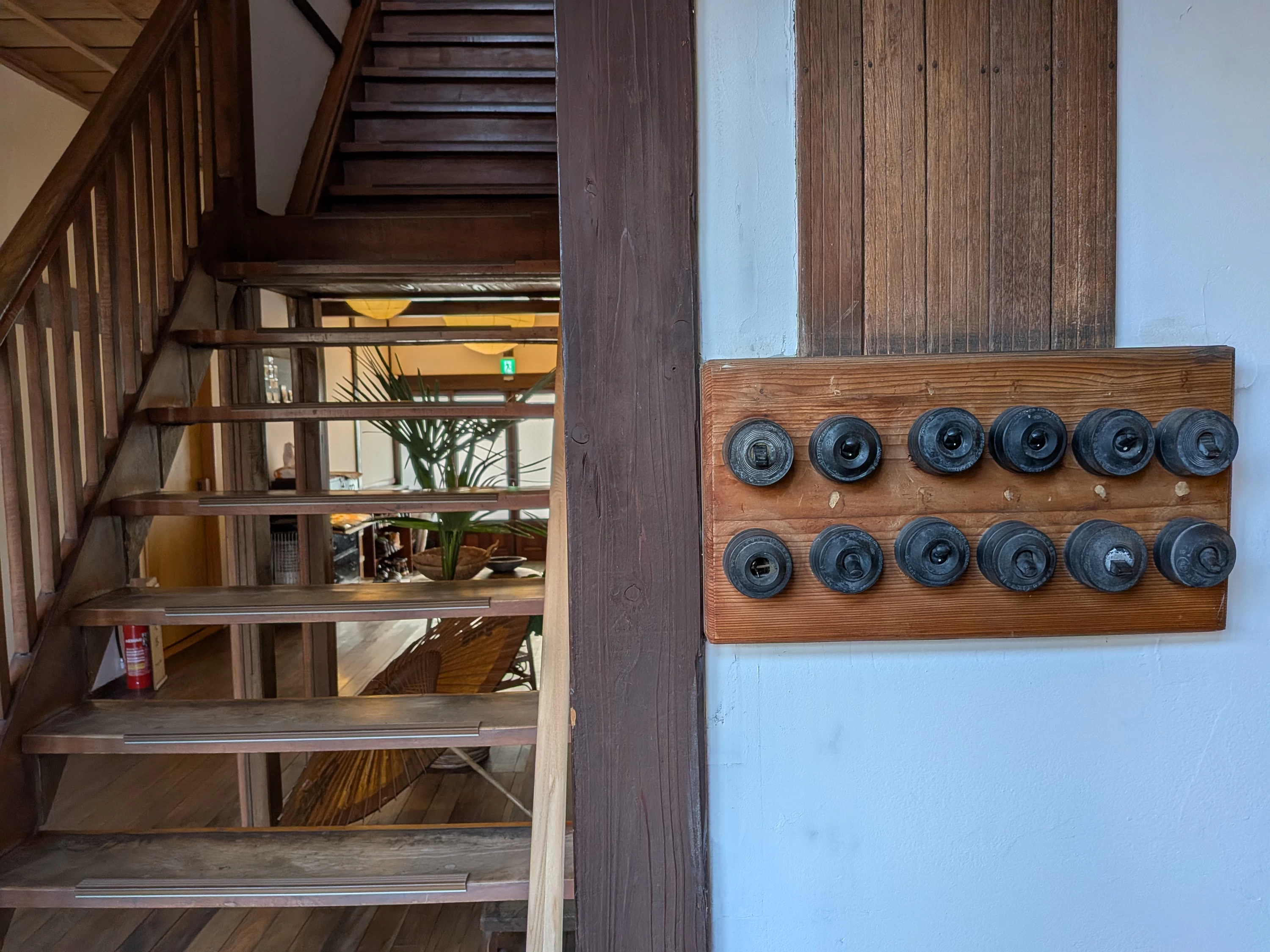

Built around 100 years ago, Moricho Ryokan retains the architectural character of early 20th-century Japan. The ryokan reopened in April 2025 after renovations, with all three of its buildings—the main building, annex, and traditional storehouse—registered as Tangible Cultural Properties by the Japanese government. The renovation preserves features such as the buildings' substantial wooden beams and traditional craftsmanship while incorporating modern amenities.
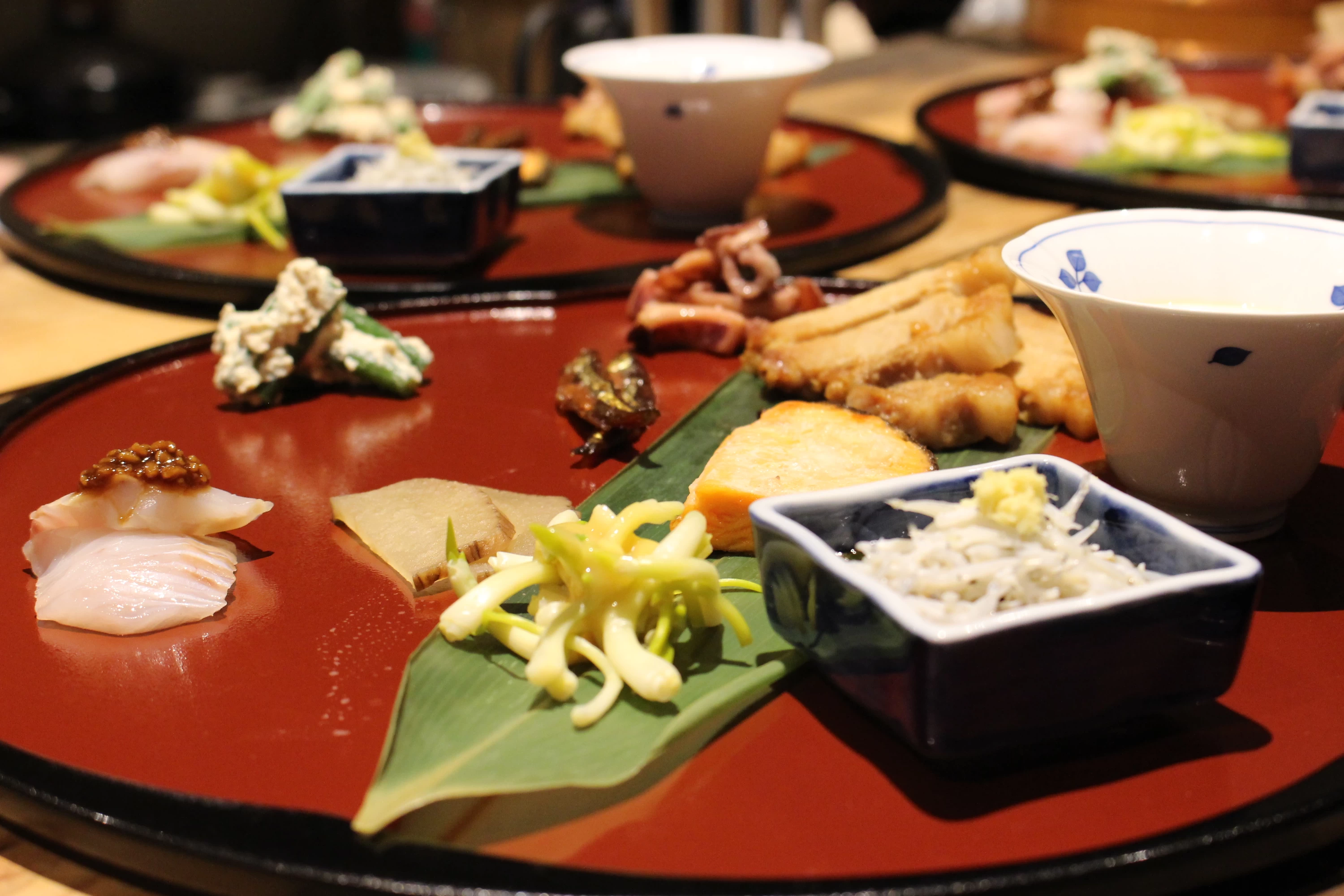

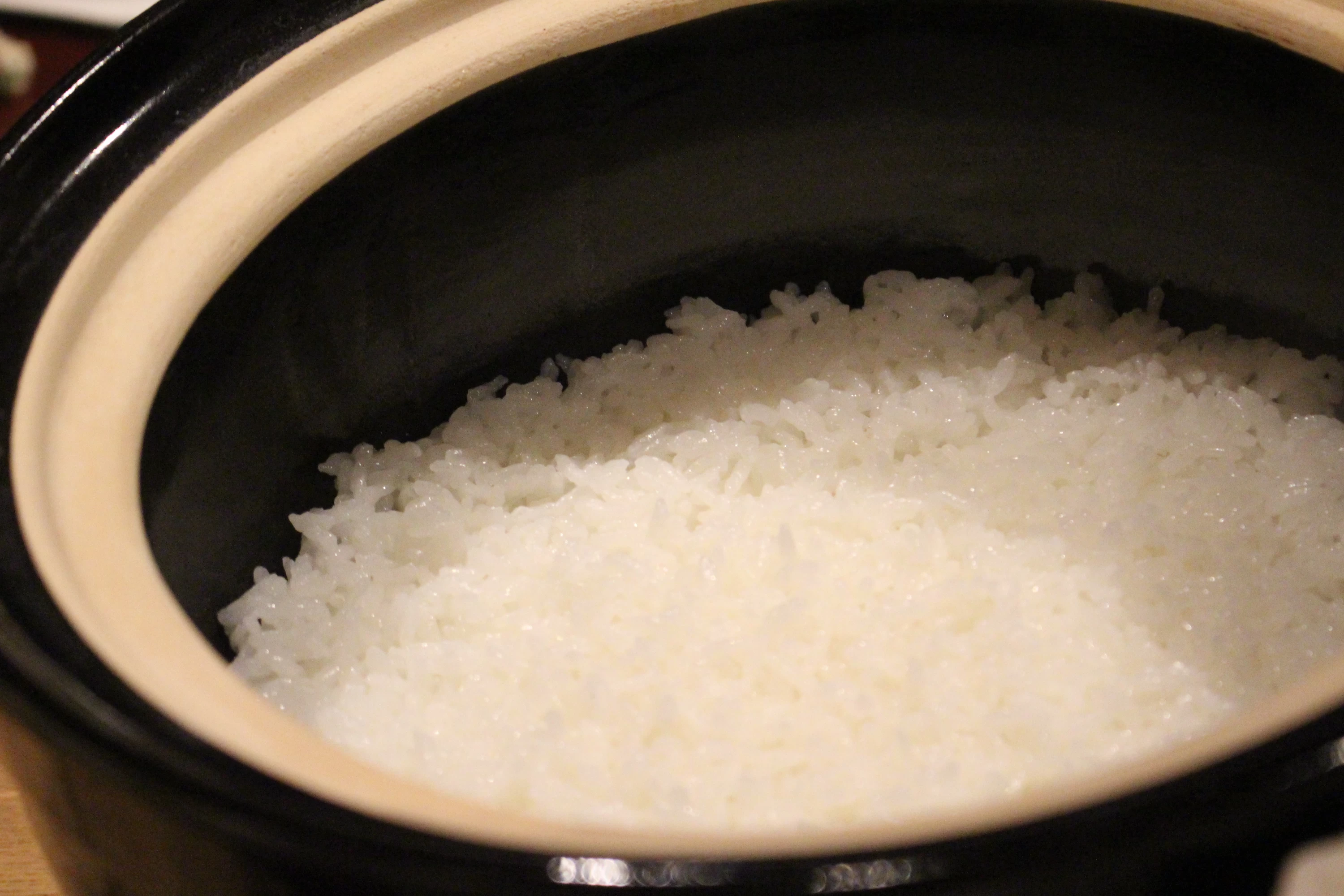
Dinner at Moricho Ryokan reflects Akita's food culture and its long tradition of fermentation. The meal combines local ingredients with wild mountain vegetables that appear after the snow melts and seaweed from the waters around Oga. Miso, koji, and soy sauce are among the fermented ingredients used in the dishes, along with local knowledge of preserving what nature provides.
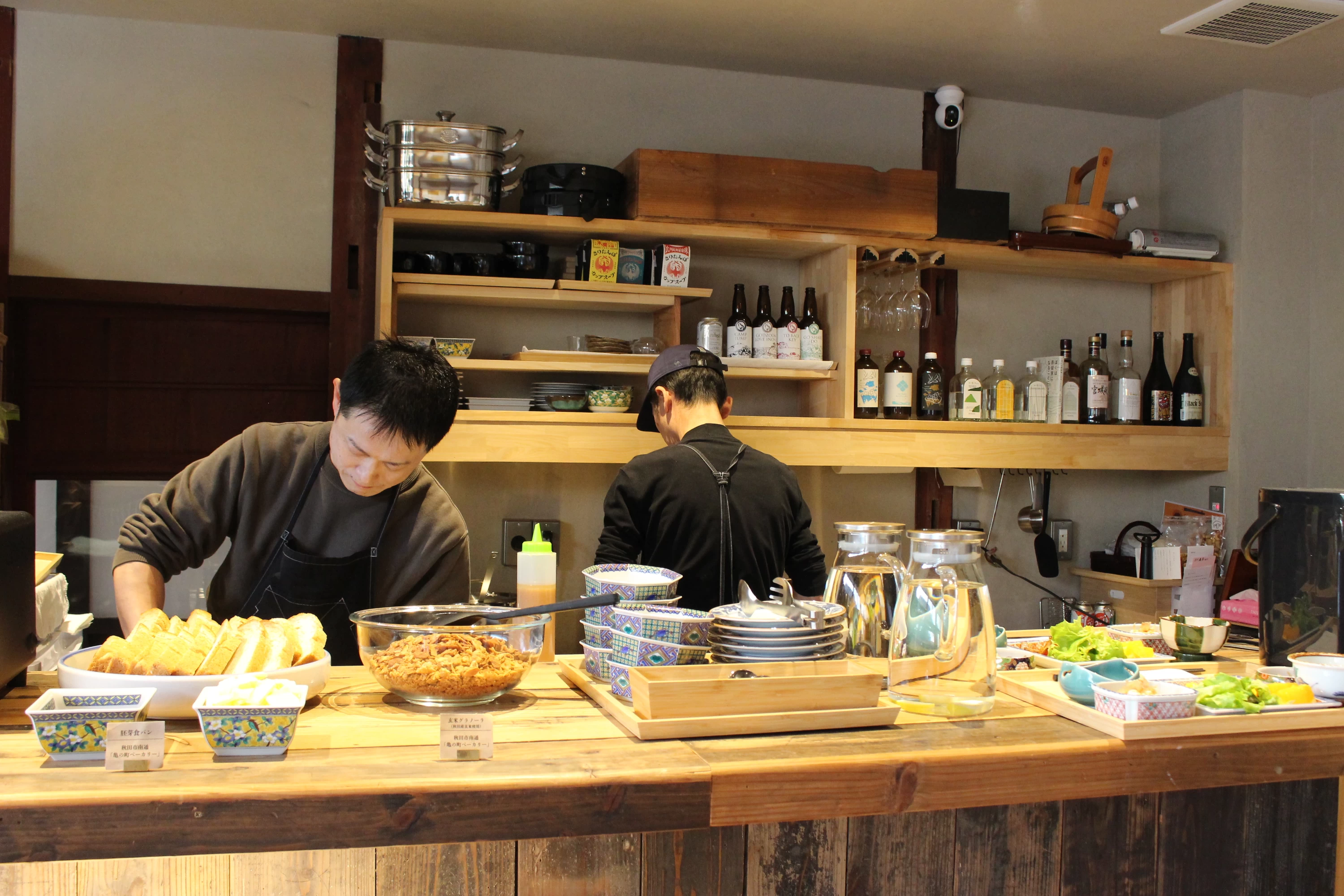
Preparing breakfast
Breakfast features a selection of dishes designed to be light yet nourishing, leaving you feeling refreshed and ready for the day.
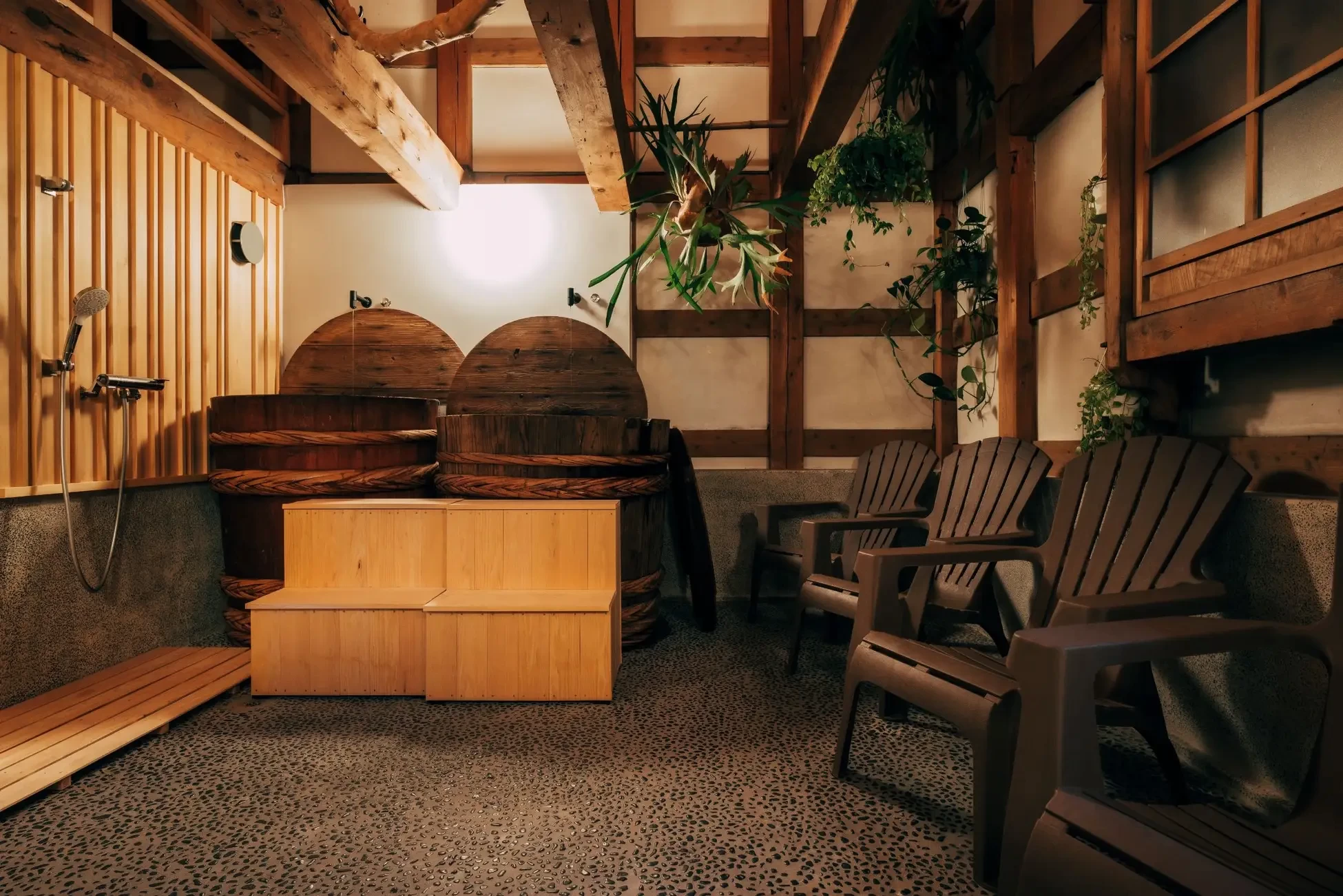
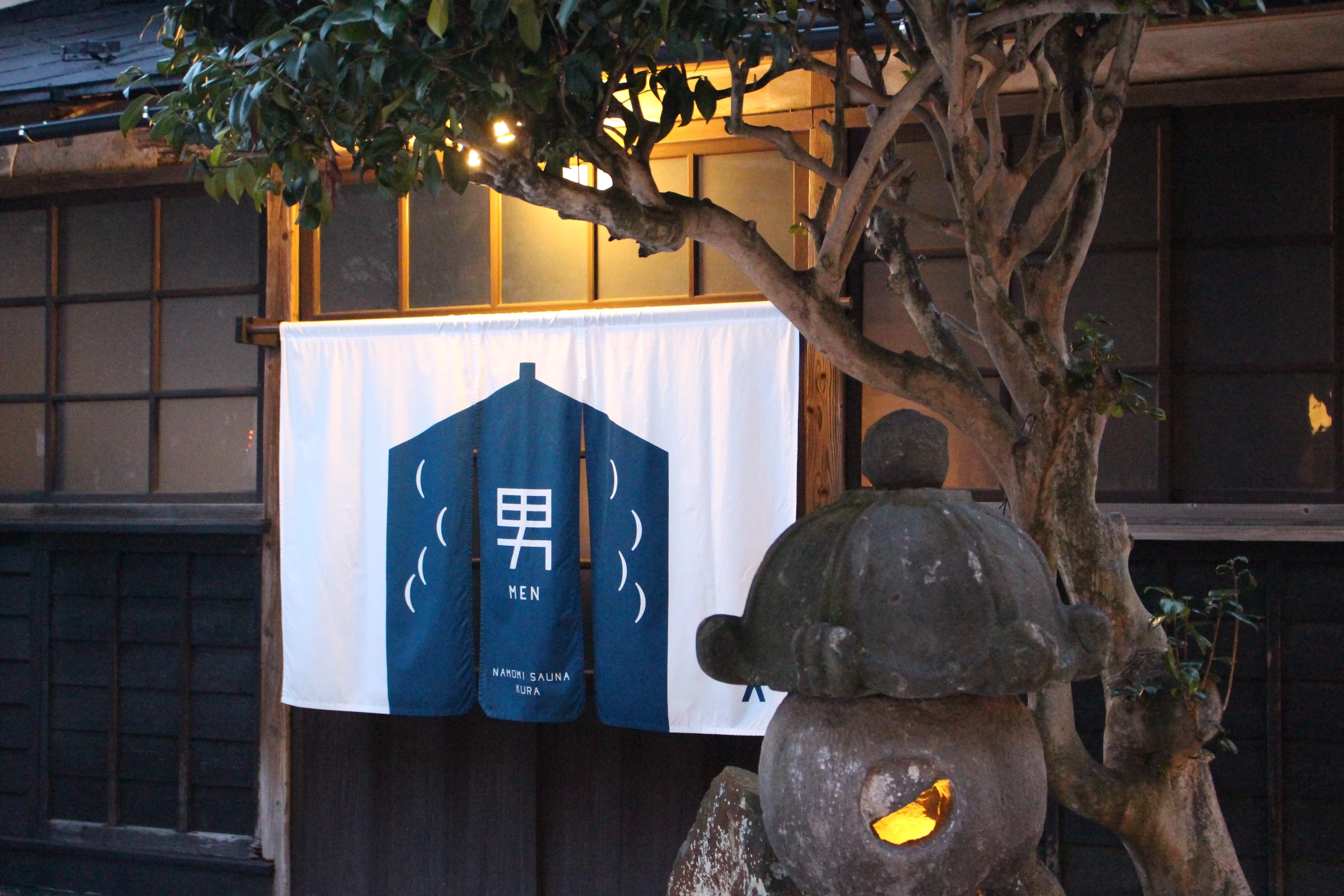
One of the highlights of the stay is NAMOMI SAUNA KURA, a private sauna created from a traditional storehouse. Its thick earthen walls and original wooden features give the space a quiet, historic atmosphere.
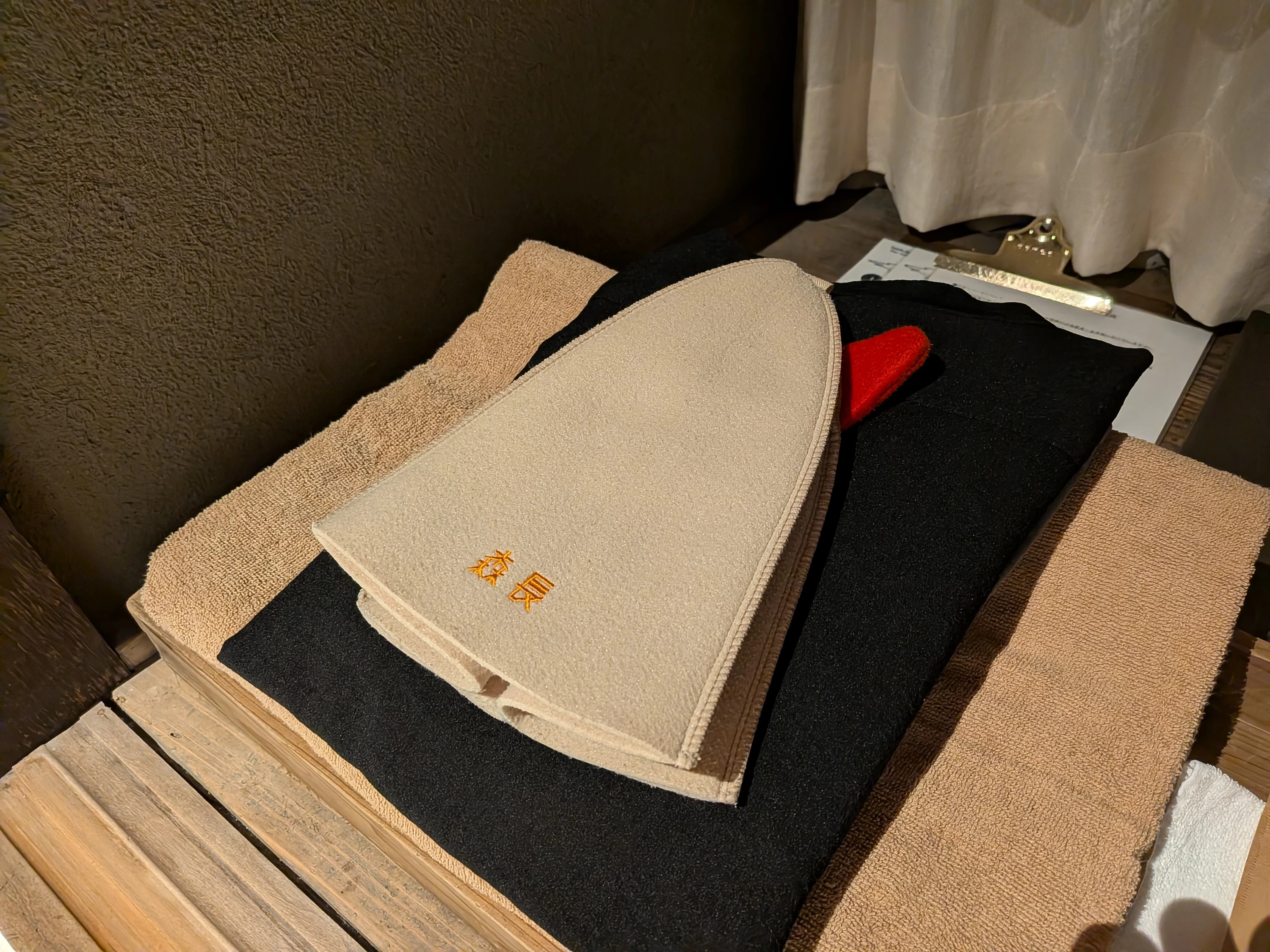
A sauna hat with the Moricho Ryokan logo
Sauna amenities, including a sauna hat, are provided in the guest room. As someone who usually brings my own, I appreciated not having to pack one.
The gentle heat of the wood-burning stove and the scent of the old timber are especially enjoyable in winter. After the sauna, stepping outside into Oga's crisp winter air is a refreshing way to cool down.

Moricho Ryokan is designed to give guests uninterrupted time to themselves. There are no TVs in the guest rooms, and staff are not stationed at the property overnight, although an emergency contact system is available.
These arrangements allow guests to step away from the constant flow of information and enjoy a quieter stay. With fewer distractions, you can take your time and simply relax in the historic surroundings.
Moricho Ryokan
The Namahage Sedo Festival left me with a vivid impression of Oga—its traditions brought to life through fire, drums, masks, and ritual. But what stayed with me was the contrast between that intensity and the quiet time I spent at Moricho Ryokan afterward.
The combination made this winter trip feel different from a typical sightseeing visit: I came to experience Namahage, but also had time to slow down and appreciate the history and atmosphere of Oga itself.
Was it helpful? Please try using it when traveling or going out.
Article planning/supervision:旅色編集部 fukai
writer:fukai
Updated every Monday: Total number of views for 30 days


Coin lockers at Disneyland! Also what to do when you don't have a place or space to leave your belongings!
2024/11/25


Summary of Luggage Lockers (Coin Lockers) at Yokohama Station! Where Can You Find Free or Affordable Options?
2025/01/31


12 Must-Visit Okinawa Souvenir Shops for Awamori, Perfume, and Ryukyu Glass
2026/05/04


Top 10 Souvenirs to Buy at Shin-Yokohama Station — Best Spots for Cute Treats
2026/05/05


Exploring Okinawa by Campervan: A First-Timer’s Guide
2026/05/15
Namahage Museum Oga Shinzan Folklore Museum
-40-minute drive from Showa Oga Peninsula IC -20-minute drive from Oga Station