


日吉大社
 Otsu City, Shiga
Hiyoshi Taisha Shrine
日吉大社
The Head Shrine of Sanno Worship Guarding Heian-kyo's Northeast Demon Gate
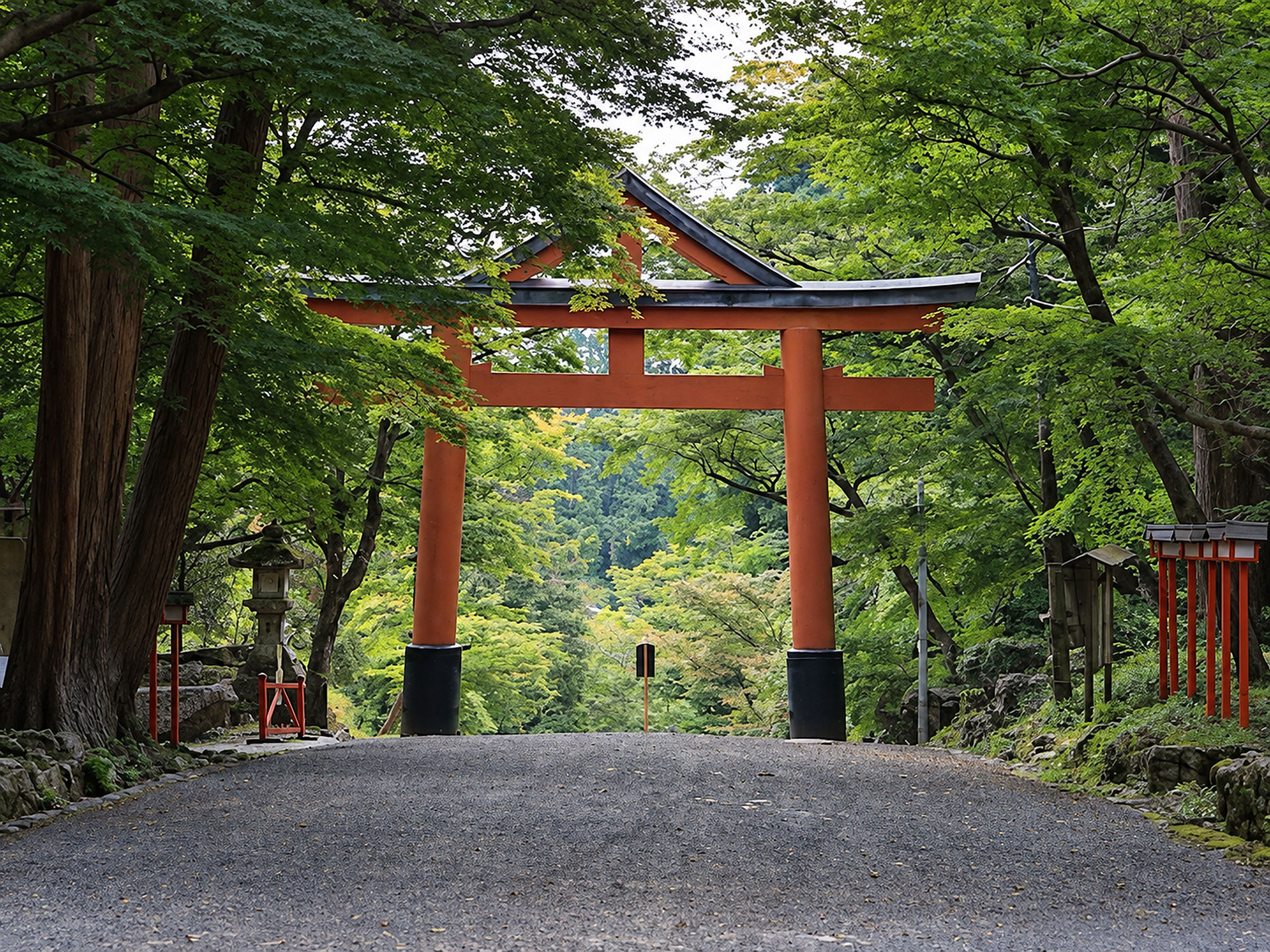
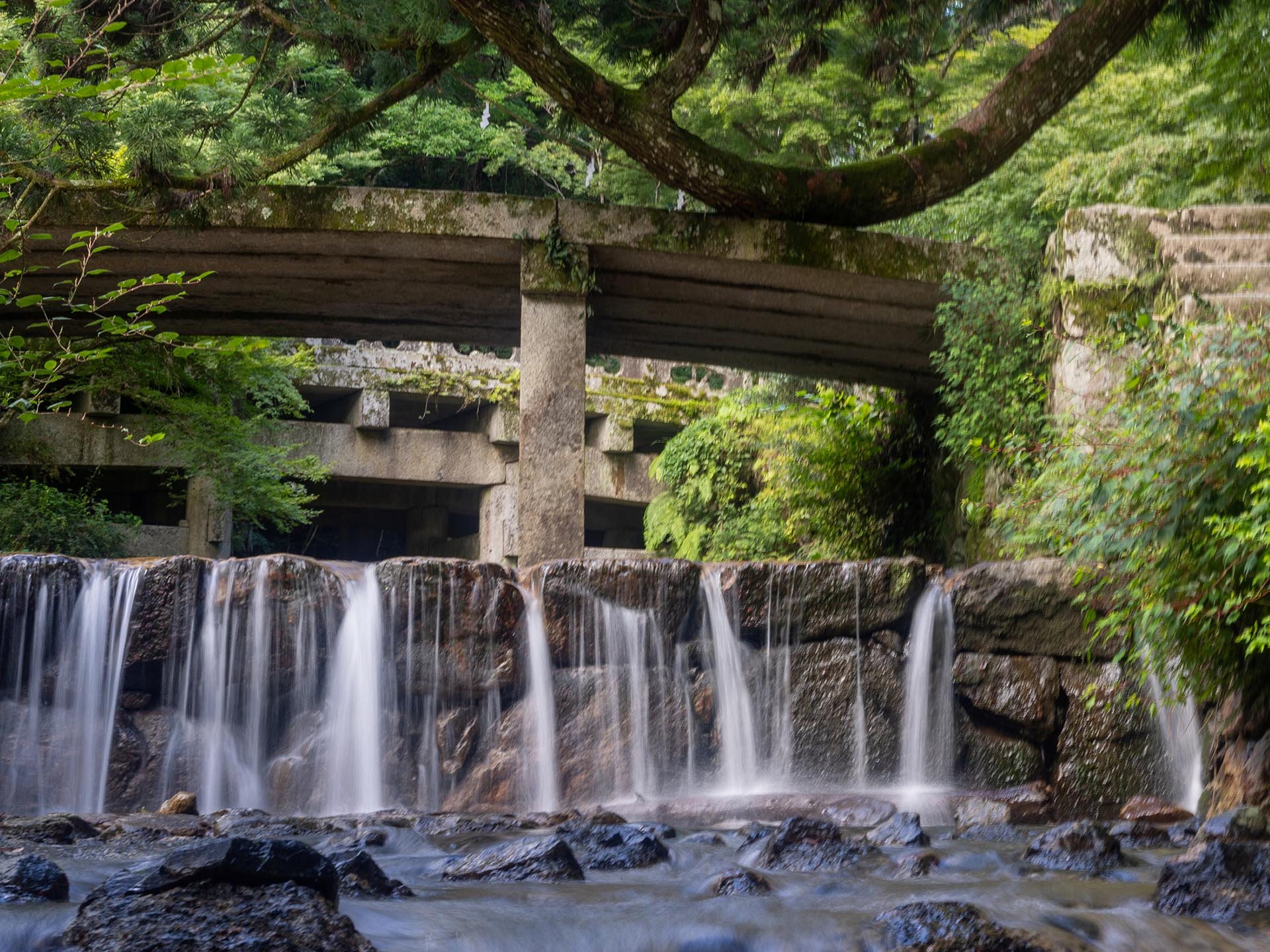
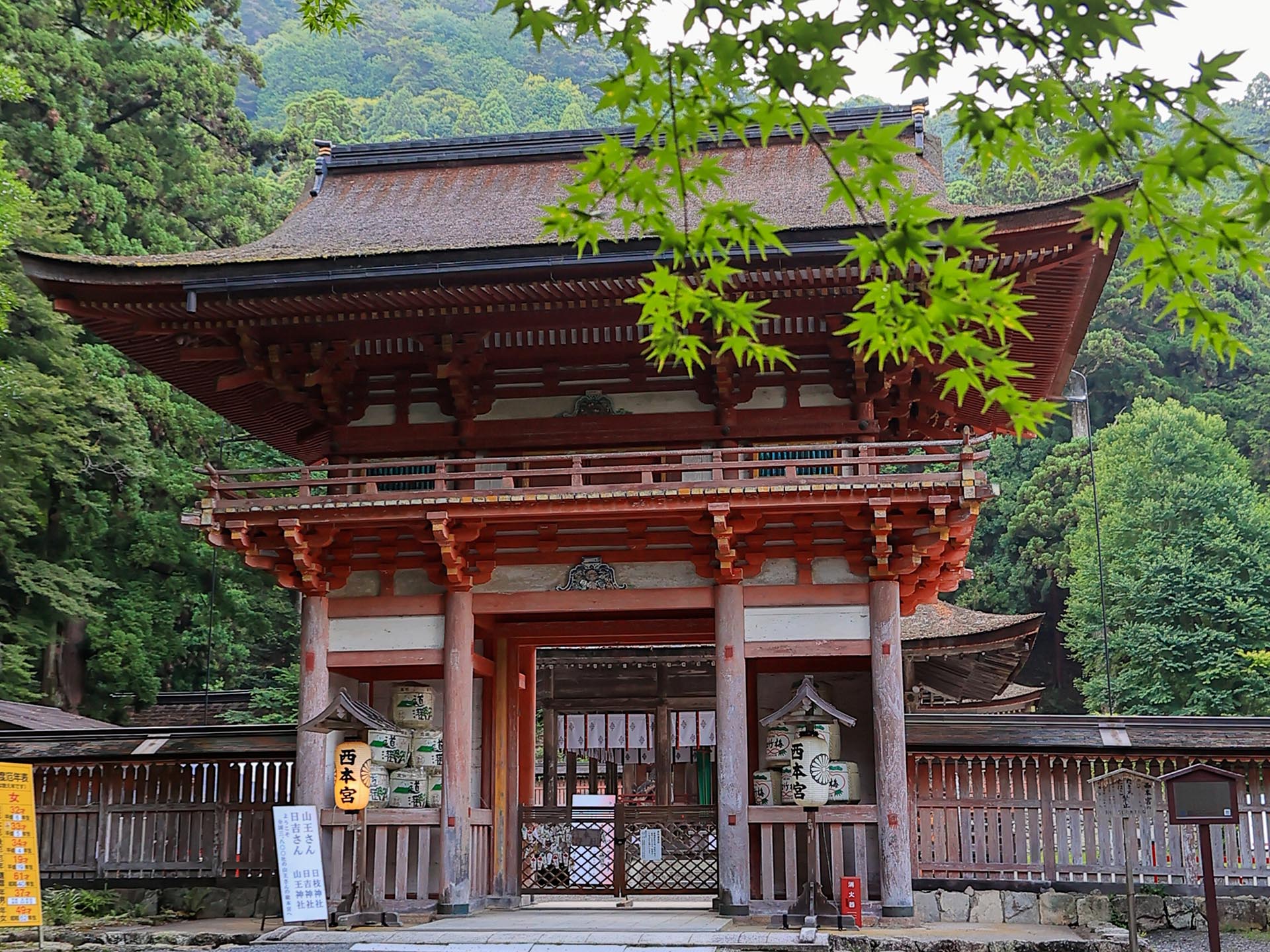
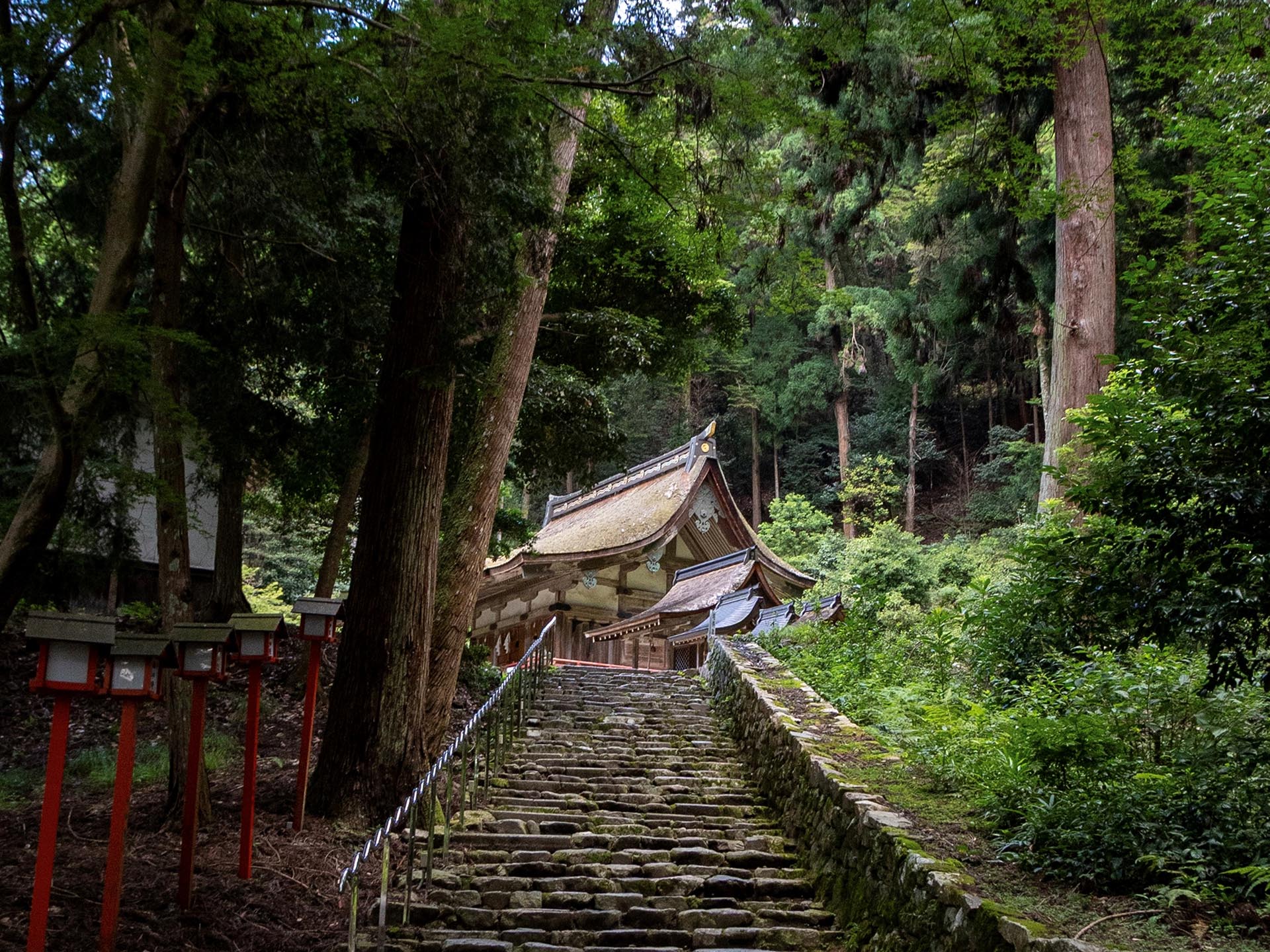
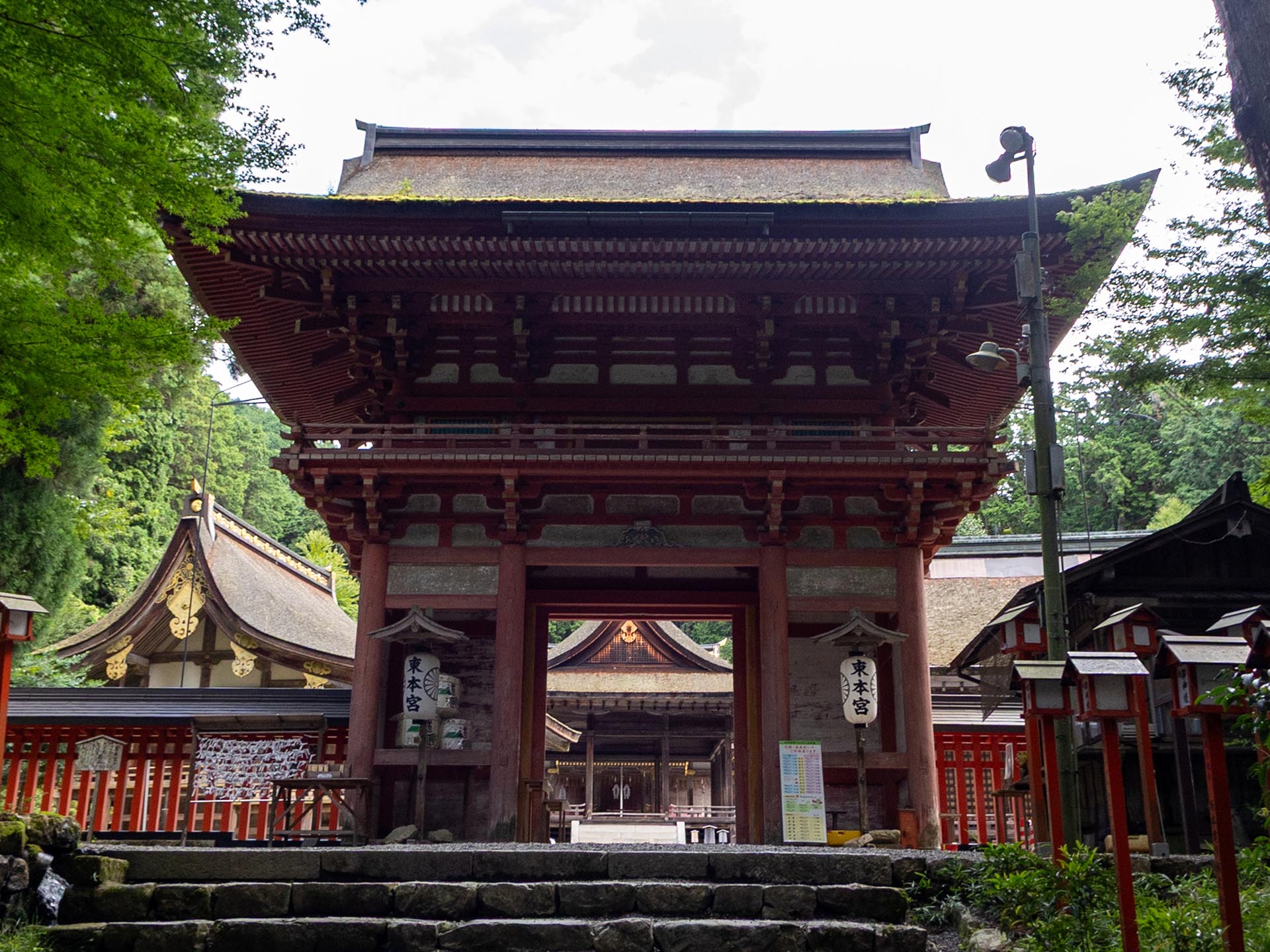
"Hiyoshi Taisha," located in Otsu City, Shiga Prefecture, was founded approximately 2,100 years ago and is the head shrine of more than 3,800 Hiyoshi, Hie, and Sanno shrines across Japan. It has long been revered as a major shrine guarding the northeastern "demon gate" of Heian-kyo, offering protection against inauspicious directions and misfortune. Its deities have also been worshiped as guardians of "Enryakuji Temple on Mount Hiei." The grounds feature two National Treasure main halls, Nishi Hongu and Higashi Hongu, both built in the Hiyoshi-zukuri architectural style, along with 17 buildings designated Important Cultural Properties. Surrounded by deep forest and the gentle sound of the Omiya River, the shrine offers exceptional seasonal beauty, from cherry blossoms in spring to approximately 3,000 maple trees displaying vibrant colors in fall. Its long history of worship and peaceful surroundings offer a chance for quiet reflection.


- The shrine is traditionally said to have been founded around 2,100 years ago, in the seventh year of Emperor Sujin's reign. The East Main Sanctuary enshrines Oyamakui-no-Kami, the tutelary kami of Mount Hiei.
- In 668, Oonamuchi-no-Kami was invited from Mount Miwa in Nara Prefecture and enshrined at the West Main Sanctuary to protect the capital at Otsu.
- In 1571, all of the shrine buildings were destroyed during Oda Nobunaga's attack on Mount Hiei. With donations from Toyotomi Hideyoshi, the complex of shrine buildings was rebuilt during the Momoyama period.

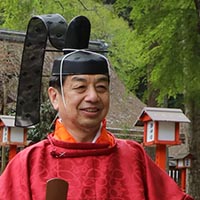
Chief priest
Mori Shingo
After graduating from the Department of Shinto Studies at Kogakkan University, he served at "Hiyoshi Taisha Shrine" and "Yasaka Shrine" before spending 31 years at "Jingu (Ise Jingu)." He served there as a negi priest before becoming chief priest of "Hiyoshi Taisha Shrine"
-

Kogane no Oiwa, Said to Mark the Descent of a Deity
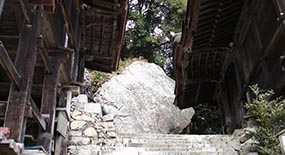
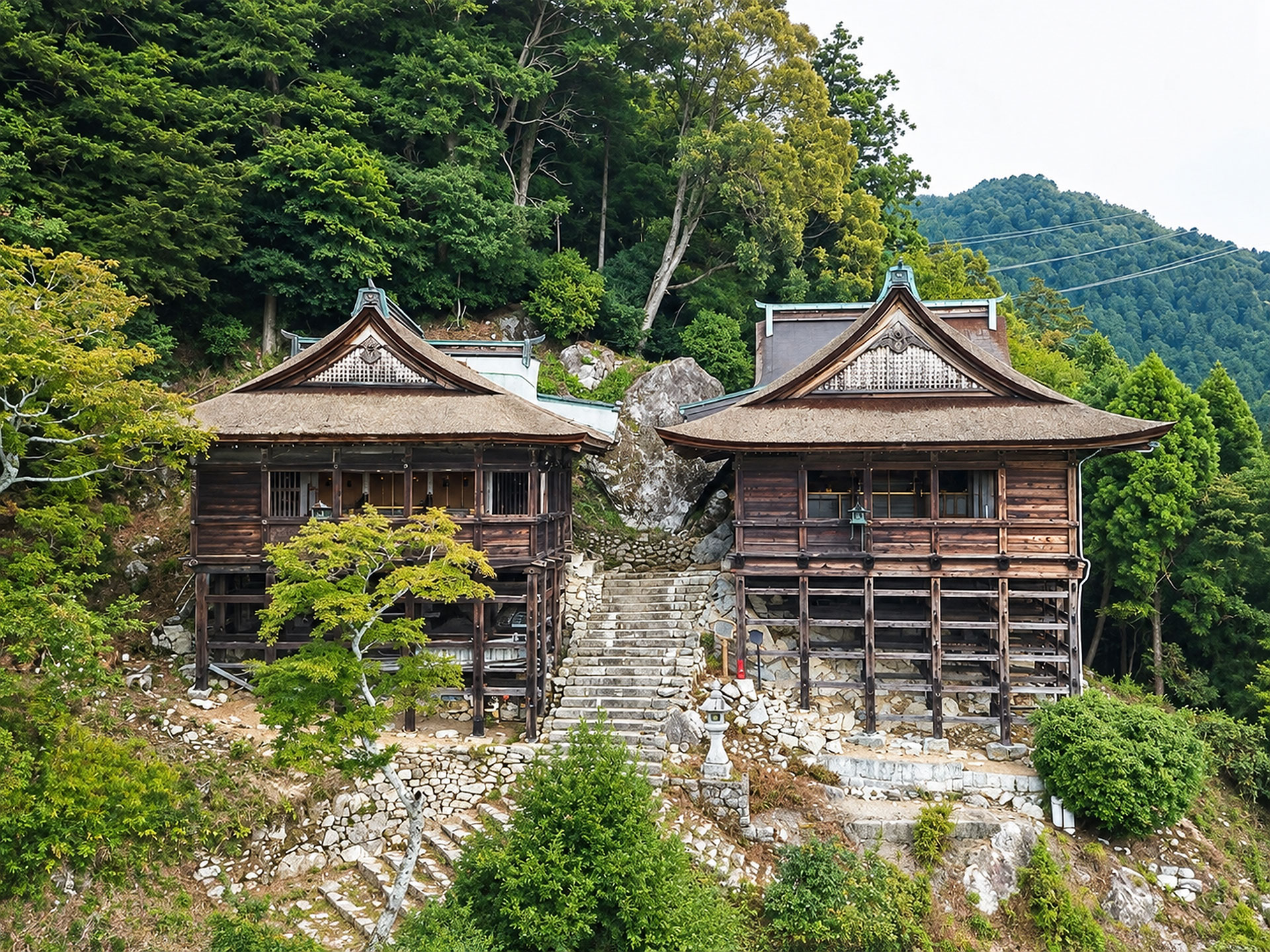
Kogane no Oiwa, a massive rock rising near the summit of Mount Hachioji in Otsu City, Shiga Prefecture, is regarded as the origin of worship at "Hiyoshi Taisha Shrine", where Oyamakui-no-Kami is said to have descended. After an approximately 30-minute climb along the mountain path from the Yohaijo worship area, Ushio-gu and Sannomiya, both built in the kake-zukuri style, stand overlooking Lake Biwa.
-

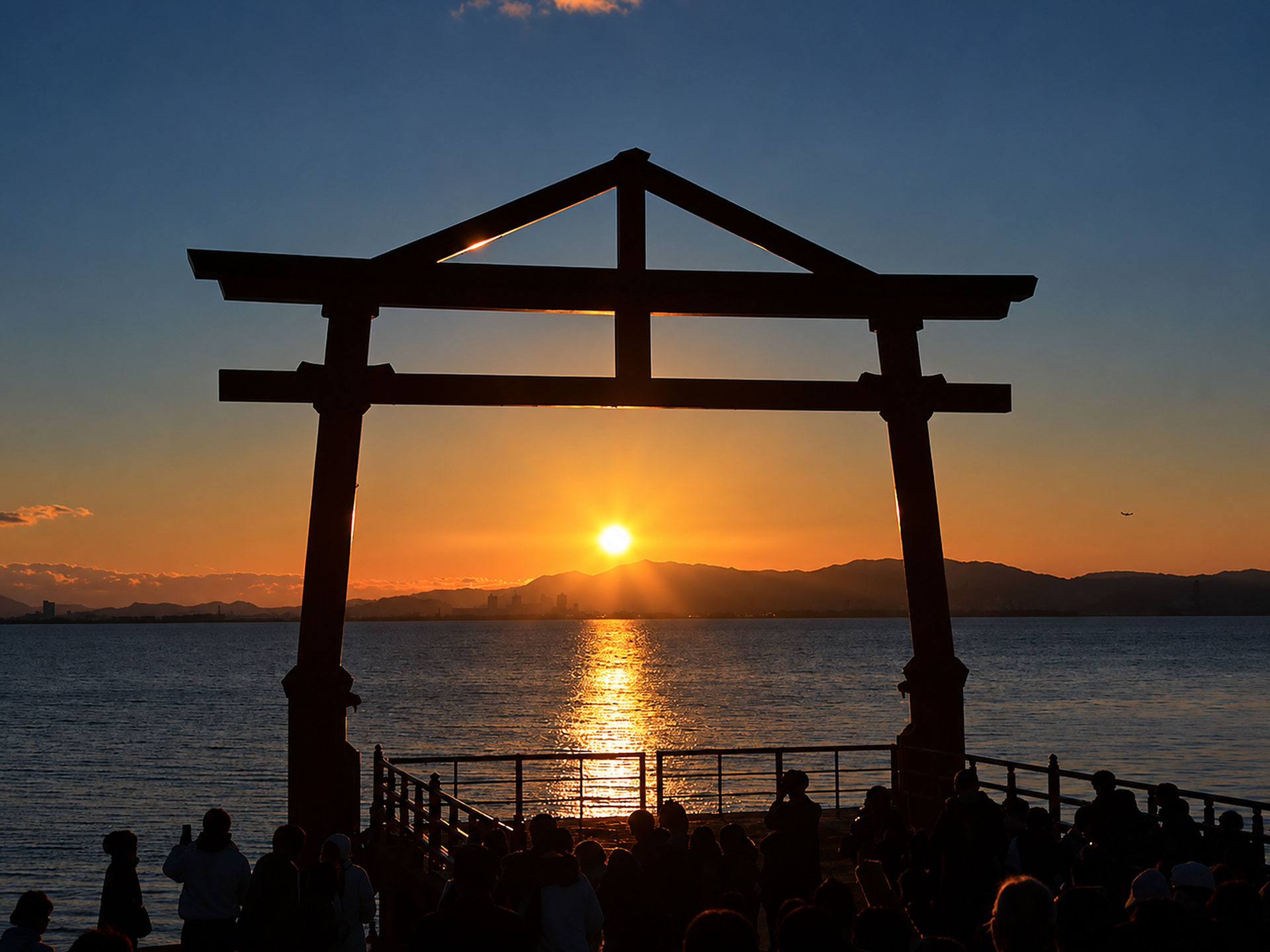
The Sanno Torii, a Symbol of Shinto-Buddhist Syncretism
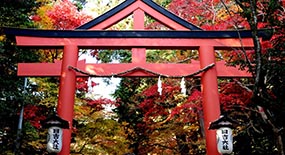
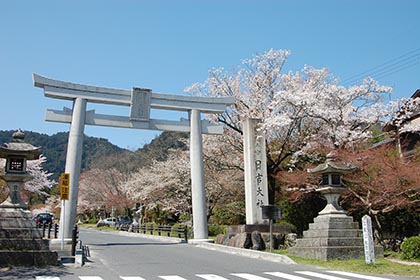
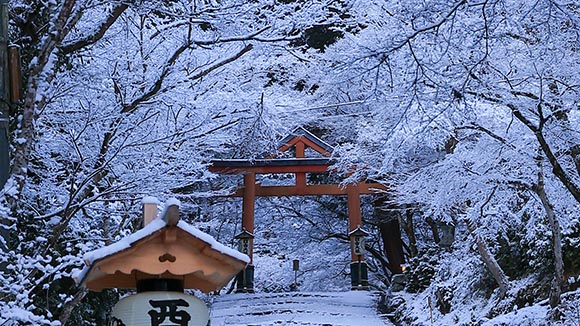
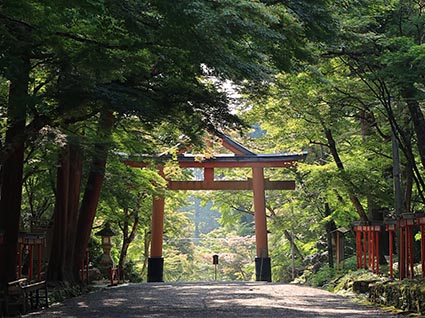
The Sanno Torii consists of a Myojin-style torii topped by a triangular gable representing Mount Hiei. The form is also said to symbolize "Sanno" and represents the union of the Womb Realm and Diamond Realm of Esoteric Buddhism with Shinto. It expresses Sanno worship, which brought together devotion to Hiyoshi Okami and the Buddhist tradition of "Hieizan Enryakuji Temple".
-

The Sanno Festival Featuring Seven Mikoshi
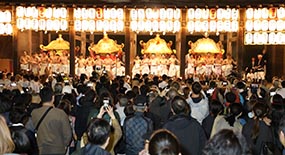
The "Sanno Festival", passed down for more than 1,200 years, is one of the three major festivals of the Lake Biwa region. Seven mikoshi (portable shrines) carrying the deities of Mount Hiei travel through the town of Sakamoto and cross Lake Biwa. Highlights include spirited Shinto rituals said to represent the union of a married pair of deities and the birth of their child deity, as well as Buddhist sutra chanting before the deities by monks from "Hieizan Enryakuji Temple".

 Shichi-go-san (Children’s Ceremony)
 Miyamairi (Newborn Blessing)
 Matchmaking
 Cutting Ties
 Financial Luck
 Business Prosperity
 Yakuyoke (Purification)
 Health & Well-being
 Safe Childbirth
 Exam Success
 Traffic Safety
 Fertility
 Performing Arts
 Love Fulfillment
 Bountiful Harvest
 Family Safety
 Academic Success
 Recovery from Illness
Tracing the past
Origins & Heritage
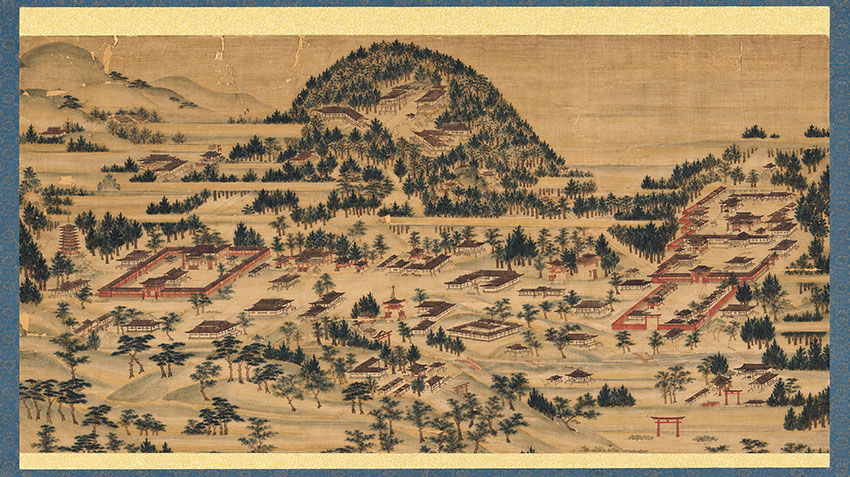
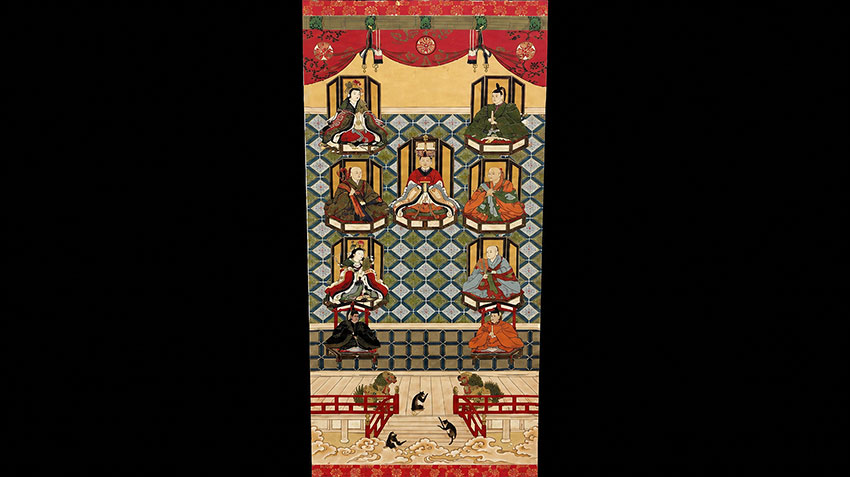
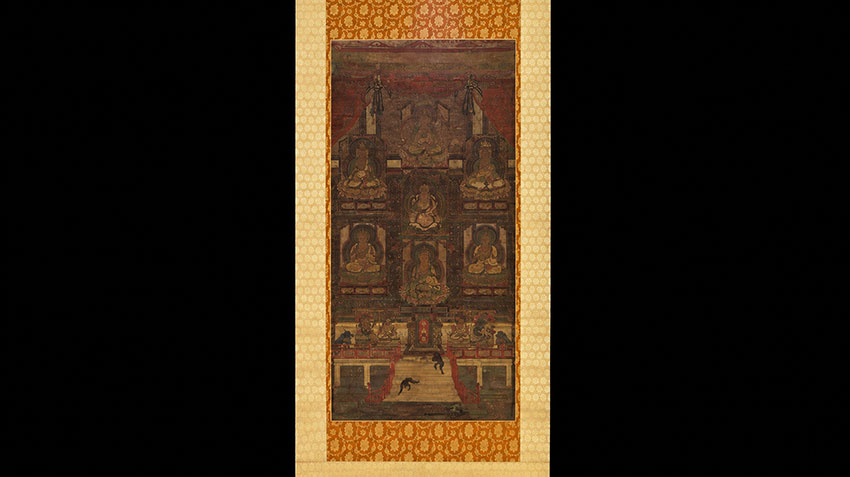
A World of Sanno Belief Where Gods and Buddhas Resonate
After Saicho, also known as Dengyo Daishi, established a Tendai training center on Mount Hiei, Hiyoshi Okami, enshrined at the foot of the mountain, came to be revered as Sanno Gongen, a protector of Buddhist teachings. Under the honji suijaku concept that Buddhas appear in the form of deities to save people, corresponding Buddhist figures were assigned to the seven Sanno shrines, creating an elaborate world of worship. This is expressed in works such as the "Himitsu Sanno Mandala," depicting Hachioji-yama and the shrine buildings, the "Hie Sanno Suijaku Shin Mandala," showing the deities, and the "Hie Sanno Honji Butsu Mandala," depicting their corresponding Buddhist figures. Sanno belief spread throughout Japan together with Tendai Buddhism, linking Mount Hiei and Sakamoto, and "Enryakuji Temple on Mount Hiei" and "Hiyoshi Taisha Shrine," as a single sacred realm. Even after the Meiji-period separation of Shinto and Buddhism, the deep forest still reflects the long history of reverence for both deities and Buddhas.
Main hall
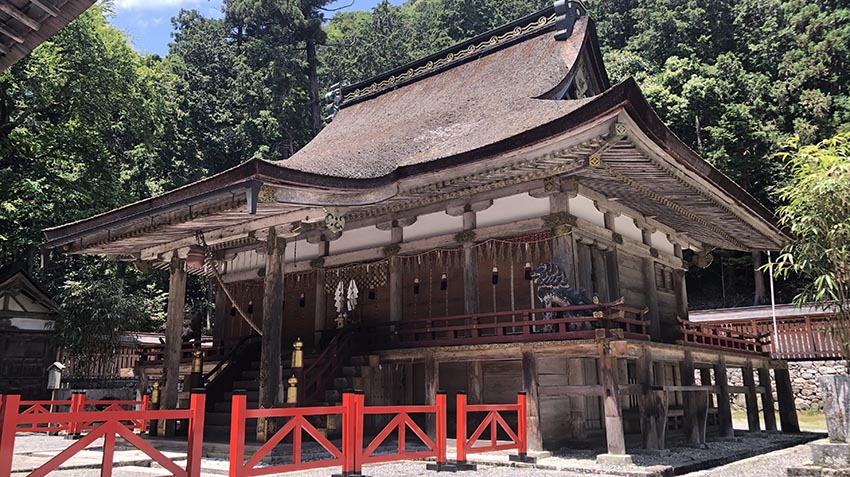
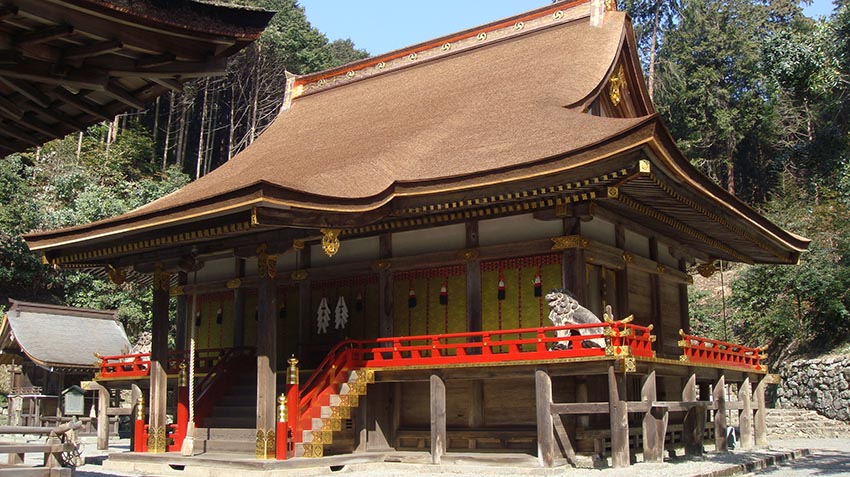
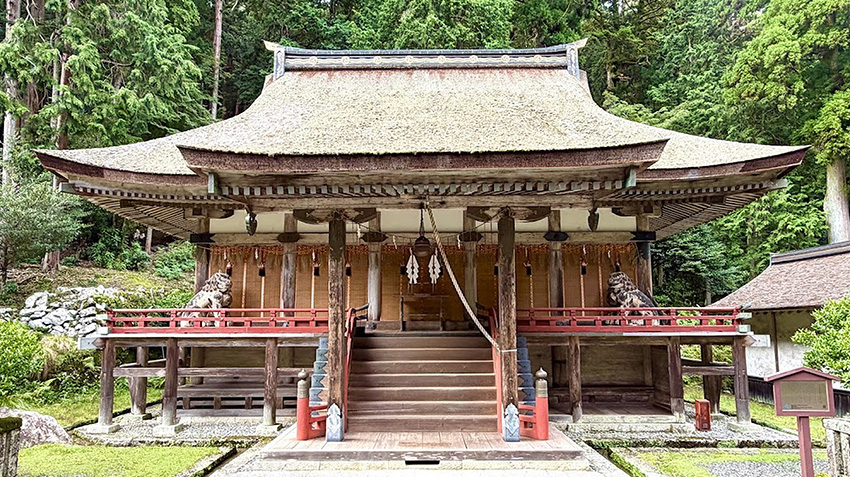
The Beauty of Hiyoshi-zukuri Architecture in Three Main Halls
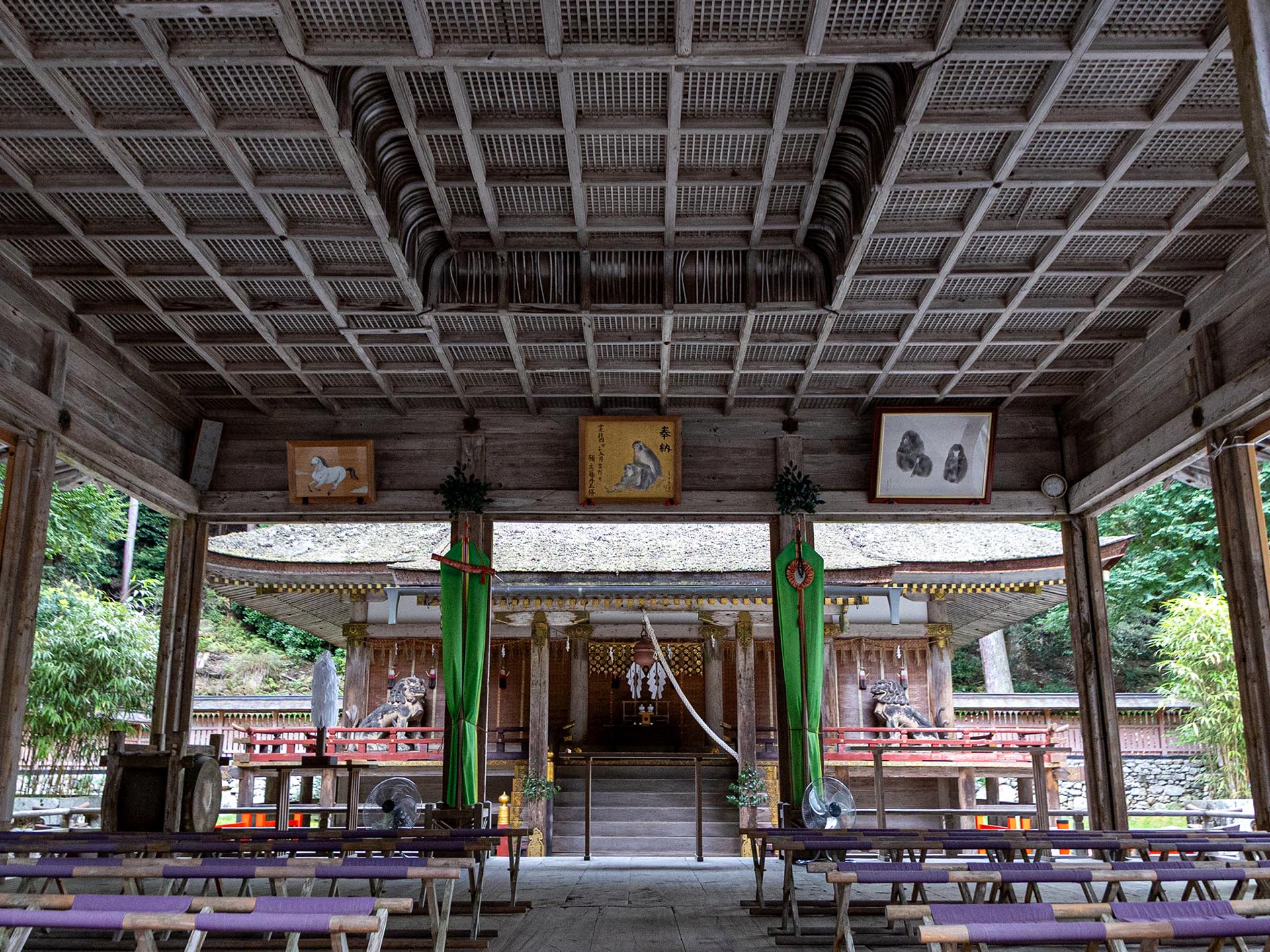
Among the highlights of "Hiyoshi Taisha Shrine" are the National Treasure Main Sanctuaries of the West Main Shrine and East Main Shrine, together with the Main Sanctuary of Usa-gu, designated an Important Cultural Property. All three share "Hiyoshi-zukuri", the distinctive architectural style unique to "Hiyoshi Taisha Shrine". The inner sanctuary is enclosed by wooden walls, with a door only at the center of the front. Eaves extend across the front and both sides, while the irimoya roof appears to be cut short at the rear, creating the characteristic form of Hiyoshi-zukuri. Each building measures five bays across and three bays deep, with a large cypress-bark roof forming elegant curves. Comparing the three buildings also reveals different appearances from the front and rear.
Beneath the floor is a space known as the "Geden", which was once used for Buddhist rites in which honji-butsu, the Buddhist figures corresponding to the kami, were enshrined. The West Main Shrine was rebuilt in 1586, the East Main Shrine in 1595, and Usa-gu in 1598. Having survived repeated calamities while preserving their traditional forms, these three Main Sanctuaries continue to convey the architectural beauty born from the syncretism of kami and buddhas and the craftsmanship of the Azuchi-Momoyama period.
Hiyoshi Taisha Shrine's Mikoshi
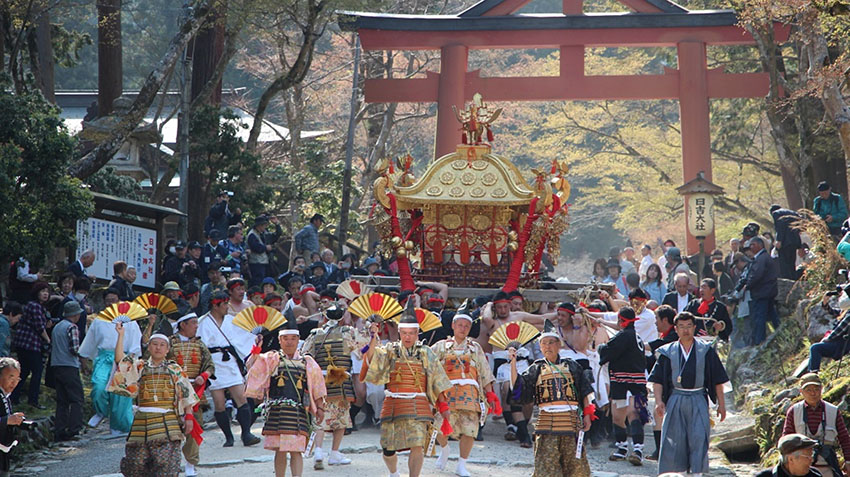
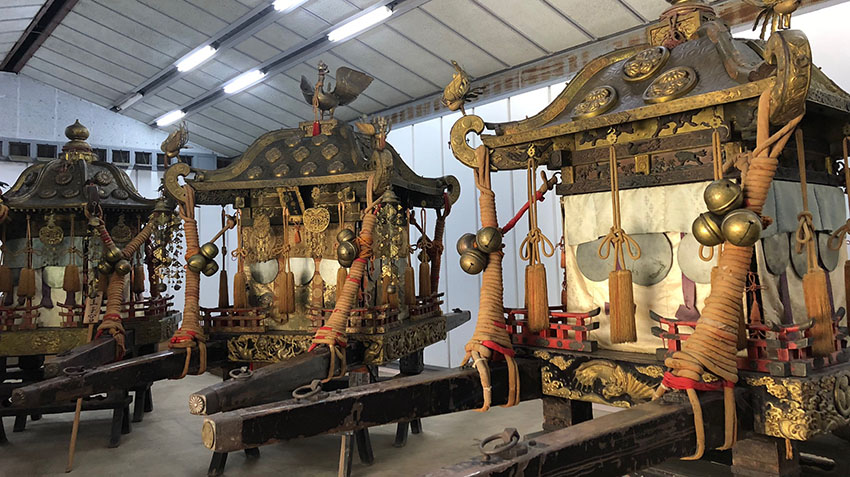
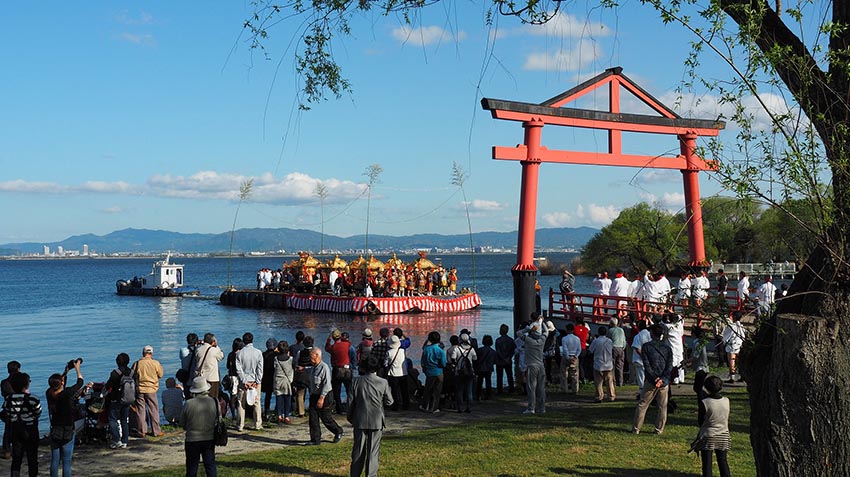
The Divine Power of the Hiyoshi Mikoshi That Once Moved the Capital
At "Hiyoshi Taisha," the mikoshi are sacred palanquins into which the deities are believed to enter. From the late Heian period onward, when their petitions went unheeded, the mountain monks of "Hieizan Enryakuji Temple" carried the mikoshi of "Hiyoshi Taisha" to the capital to press the imperial court for a decision. This practice of forceful petitioning was also known as 'mikoshi-furi.' Because damaging a mikoshi was feared to bring divine punishment, even the imperial court reportedly found it difficult to turn the monks away by force. These petitions were not merely displays of force but also religious appeals that brought the unseen power of the deity revered at Hiyoshi Taisha into the capital through the mikoshi. "The Tale of the Heike" recounts that even the retired Emperor Shirakawa could not control 'the waters of the Kamo River, the roll of dice in sugoroku, and the mountain monks.' Today, long after the era of such petitions, seven mikoshi travel through Sakamoto and cross Lake Biwa during the Sanno Festival, held to pray for peace throughout the land. The divine power that once swayed the capital continues to carry people's prayers into the future.

Seasonal beauty within the shrine's grounds and nature


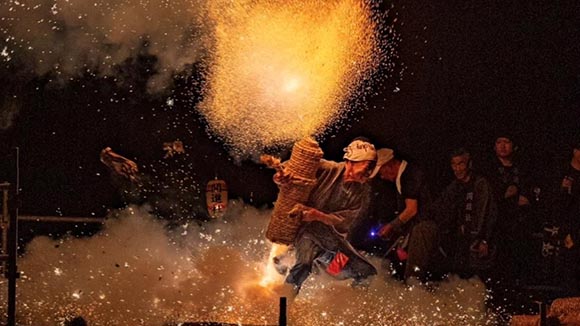
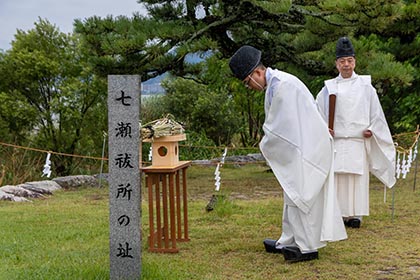
"Mitarashi Festival" with Dancing Sparks
Prayers for Health and Protection

A Canopy of Fall Colors
The Shrine Grounds in Autumn Splendor
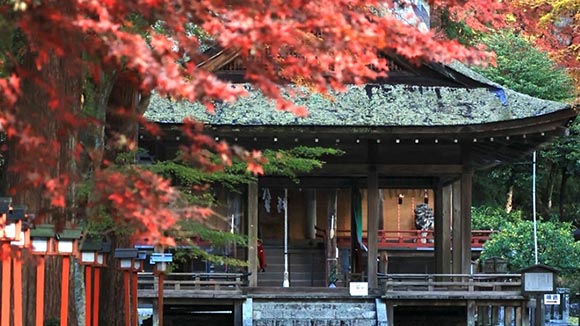
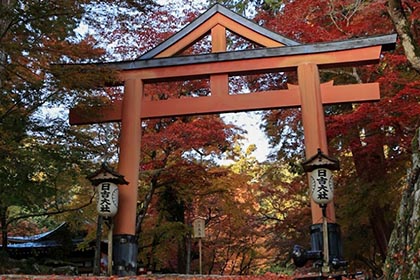

Sanno Torii Rising Against the Snow
A Shrine Resting Beneath Deep Snow
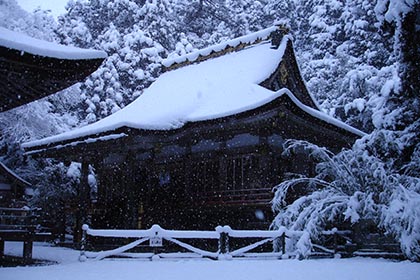

Hiyoshi Taisha Shrine
日吉大社

- Address
- 5-1-1 Sakamoto, Otsu City, Shiga
- Access
- Car: 16 minutes from Kyoto-Higashi IC on the Meishin Expressway; Train: 9-minute walk from Sakamoto-hieizanguchi Station on the Keihan Ishiyama Sakamoto Line and 20-minute walk from Hieizan-Sakamoto Station on the JR Kosei Line
- Website
- https://hiyoshitaisha.jp/
- TEL
- +81-77-578-0009Please let the staff know that you saw this on "Tabiiro."
- Social media
-
- FAX
- +81-77-578-0134
- Business hours
- [Worship and amulet office] 9:00 A.M. to 4:00 P.M. *Prayer reception: 9:00 A.M. to 3:30 P.M., [Gate opening (West and East Main Shrines)] April to September: 6:00 A.M. to 4:00 P.M., October to March: 7:00 A.M. to 4:00 P.M.
- Holidays
- Open year-round
- Admission fee
- Admission: Adults: 500 yen (250 yen for visitors with disabilities; 450 yen per person for groups of 30 or more); junior high and high school students: 300 yen (150 yen for students with disabilities); elementary school children and younger: Free; admission fees for school events and similar activities: Please inquire by phone
- Parking spaces
- 60 spaces


Nearby Spots
View MorePick popular spots nearby!
-

3.3kmfromHiyoshi Taisha Shrine
Spa Resort Ogoto Agaryanse
Address:3-9-5 Naeka, otsu, shiga
-

9.5kmfromHiyoshi Taisha Shrine
Kurama Onsen
Address:520 Kurama Honcho, kyoto, kyoto
-

10.4kmfromHiyoshi Taisha Shrine
Roadside station Imoko no Sato
Address:528 Waninaka, otsu, shiga
-

10.5kmfromHiyoshi Taisha Shrine
Senbu Taiken Kaname
Address:Samurai Sword Dance Theater, B1F GOZAN Building, 3-35 Sanjo-dori Hanamikoji Higashi-iru, kyoto, kyoto
-

10.7kmfromHiyoshi Taisha Shrine
Kyomonogatari
Address:3F Sonia Building, 318 Gion Town North Side, kyoto, kyoto
-

11kmfromHiyoshi Taisha Shrine
Kyoto Kimono Rental mimosa
Address:362 Masuya Town, kyoto, kyoto
-

11.2kmfromHiyoshi Taisha Shrine
Rental Kimono Okamoto
Address:2-237-1-1 Shimizu, kyoto, kyoto
-

11.4kmfromHiyoshi Taisha Shrine
Teacup Club
Address:546-5 Nakano Town, Shinkyogoku-dori Shijo Agaru, kyoto, kyoto
-

11.5kmfromHiyoshi Taisha Shrine
Roji Usagi
Address:176 Shimoyanagi Town, kyoto, kyoto
-

15.4kmfromHiyoshi Taisha Shrine
Toei Uzumasa Movie Village
Address:10 Uzumasa Higashi Hachioka Town, kyoto, kyoto
-
 Japanese Cuisine
655mfromHiyoshi Taisha Shrine
Teuchi Soba Tsuruki
Address:4-11-40 Sakamoto, otsu, shiga
-
 Japanese Cuisine
6.2kmfromHiyoshi Taisha Shrine
〇Bi WABI Cafe&Gallery
Address:11-1 Kannonji, otsu, shiga
-
6.8kmfromHiyoshi Taisha Shrine
OUS
Address:77 Ohara Kusao Town, kyoto, kyoto
-
Western Cuisine
7.5kmfromHiyoshi Taisha Shrine
Pizza Parlour Taupo
Address:1F Otsu Sky Heights, 2-2-5 Nionohama, otsu, shiga
-
 Western Cuisine
7.7kmfromHiyoshi Taisha Shrine
Sora coffee&scone
Address:33-4 Takano Tamaoka Town, kyoto, kyoto
-
 Local Specialties
7.8kmfromHiyoshi Taisha Shrine
Omi Beef Kanekichi
Address:1-10-18 Baba, otsu, shiga
-
 Japanese Cuisine
9.2kmfromHiyoshi Taisha Shrine
Yugyoan Tankuma Kitaten – Kyoto Nanzenji Flagship
Address:30-4 Shimokawara Town Nanzenji, kyoto, kyoto
-
 Western Cuisine
9.7kmfromHiyoshi Taisha Shrine
Niku Senka Hafu Shogoin
Address:8 Shogoin Sanno Town, kyoto, kyoto
-
 Japanese Cuisine
10.2kmfromHiyoshi Taisha Shrine
Kuramaguchi Jyusei
Address:1F/2F 228-5 Oyama Town, kyoto, kyoto
-
 Café/Sweets
10.4kmfromHiyoshi Taisha Shrine
Ray Cafe
Address:542-3 Furukawa Town, kyoto, kyoto

-

11.3kmfromHiyoshi Taisha Shrine
Four Points Flex by Sheraton Kyoto Oike
Address:661 Ogiya Town, Sakaimachi-dori Oshikoji-sagaru, kyoto, kyoto
-

11.8kmfromHiyoshi Taisha Shrine
Hotel Monterey Kyoto
Address:604 Manjuya Town, Karasuma-dori Sanjo-sagaru, kyoto, kyoto
-

12.4kmfromHiyoshi Taisha Shrine
Richmond Hotel Premier Kyoto Shijo
Address:50 Kasahoko Town, Shijo-dori Aburakoji Higashi-iru, shimogyo, kyoto
-

13.1kmfromHiyoshi Taisha Shrine
Oriental Hotel Kyoto Rokujo
Address:181 Bokumikanabutsucho, Aburanokojidori-rokujo-agaru, shimogyo, kyoto
-

13.4kmfromHiyoshi Taisha Shrine
Daiwa Roynet Hotel KYOTO-TERRACE-HACHIJO PREMIER
Address:14-1 Higashikujo, Higashisanno Town, kyoto, kyoto
-

13.4kmfromHiyoshi Taisha Shrine
Hotel Elcient Kyoto Hachijoguchi
Address:13 Higashikujo Higashisanno Town, kyoto, kyoto
-

13.6kmfromHiyoshi Taisha Shrine
Richmond Hotel Premier Kyoto Ekimae
Address:565-3 Kitafudondo Town, shimogyo, kyoto
-

13.7kmfromHiyoshi Taisha Shrine
Daiwa Roynet Hotel KYOTO-HACHIJYOGUCHI
Address:9-2 Higashikujo, Kitakarasuma Town, kyoto, kyoto
-

13.8kmfromHiyoshi Taisha Shrine
Machiya Hotel YANAGI
Address:18-12 Saiin Kamiimada Town, kyoto, kyoto
-

14.2kmfromHiyoshi Taisha Shrine
The Royal Park Hotel Kyoto Umekoji
Address:9-3 Kankiji Town, shimogyo, kyoto
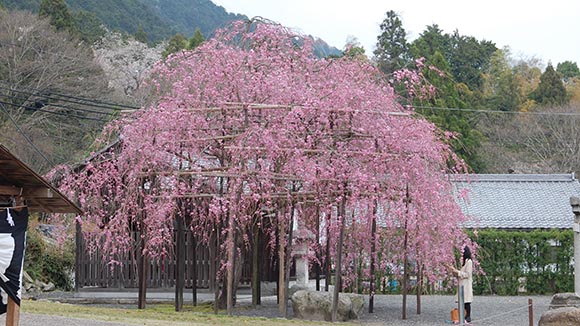
Weeping Cherry Blossoms Herald Spring
A Path of Spring Prayers