


Shrine Etiquette: How to Pray at a Shinto Shrine and How It Differs from a Buddhist Temple
2026/04/06
 2026/05/08
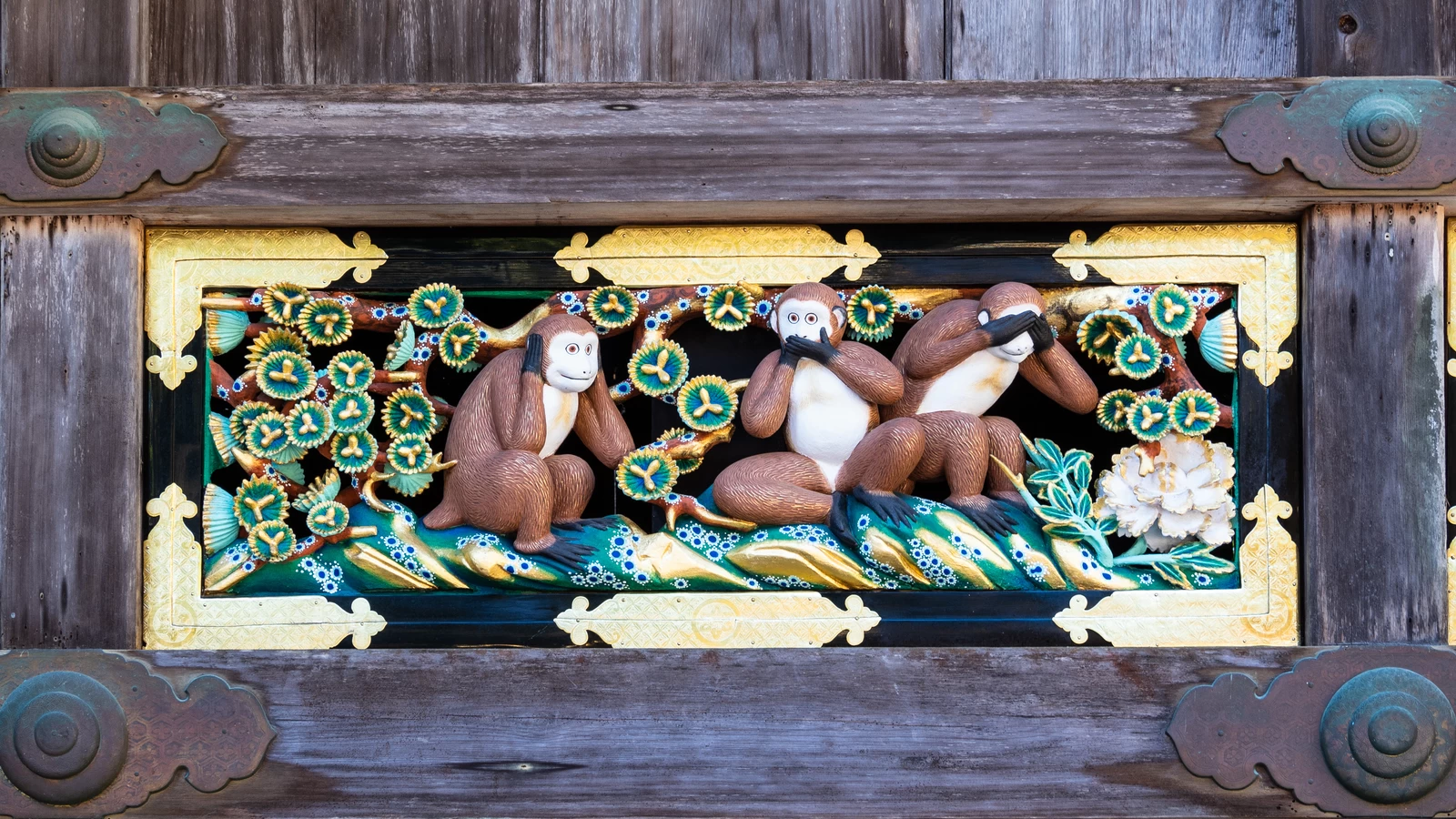
The Three Wise Monkeys—See No Evil, Hear No Evil, Speak No Evil—are a must-see highlight of Nikko Toshogu Shrine. Recent restoration work has sparked fresh interest, particularly regarding the changes in their famous facial expressions. Discover the fascinating history and hidden meanings behind these iconic carvings, and find out why their look has evolved.
Table of Contents of This Article
Open Table of Contents ▼
*Image
The Three Wise Monkeys—See No Evil, Hear No Evil, Speak No Evil—are the most iconic symbols of Nikko Toshogu Shrine. In fact, no visit to the shrine is complete without seeing these world-famous carvings. Discover the fascinating history and deeper meaning behind these beloved figures.
*As of July 2025; please check official sites for updates.
*Image
The Three Wise Monkeys are relief carvings found on the Sacred Stable at Nikko Toshogu Shrine. Dating back to the early Edo period, these iconic figures—along with the famous Sleeping Cat—are a major draw for visitors from around the world. As a designated Important Cultural Property, they hold immense historical value. Let’s dive into their fascinating origins and meaning.
While the Three Wise Monkeys are often associated with Japan, the motif itself has been found in ancient Egypt and even at Angkor Wat. Some theories suggest these iconic figures traveled a great distance, eventually reaching Japan via the Silk Road.
So where does the famous phrase See No Evil, Hear No Evil, Speak No Evil come from? It is believed to be rooted in a passage from The Analects, which teaches: ""Look not at what is contrary to propriety; listen not to what is contrary to propriety; speak not what is contrary to propriety; make no movement which is contrary to propriety."" These teachings were likely brought to Japan in the 8th century by Buddhist monks returning from studies abroad.
The location of the carvings is also significant. They are found on the Sacred Stable at Nikko Toshogu Shrine, which houses the shrine’s sacred horses. According to traditional Yin-Yang and Five Elements philosophy, monkeys were seen as guardians that protected horses from illness and misfortune. This spiritual connection is likely why the Three Wise Monkeys were chosen to adorn the stable.
Looking back at the original passage from The Analects, we find a fourth instruction: "Make no movement which is contrary to propriety." This is why some countries, such as China and Thailand, feature a Four Monkeys motif.
Following the familiar pattern, this fourth figure represents "Do No Evil." In some carvings, the monkey is shown covering its groin, interpreted as a caution against sexual impropriety. In other versions, the monkey covers its nose, symbolizing "Smell No Evil."
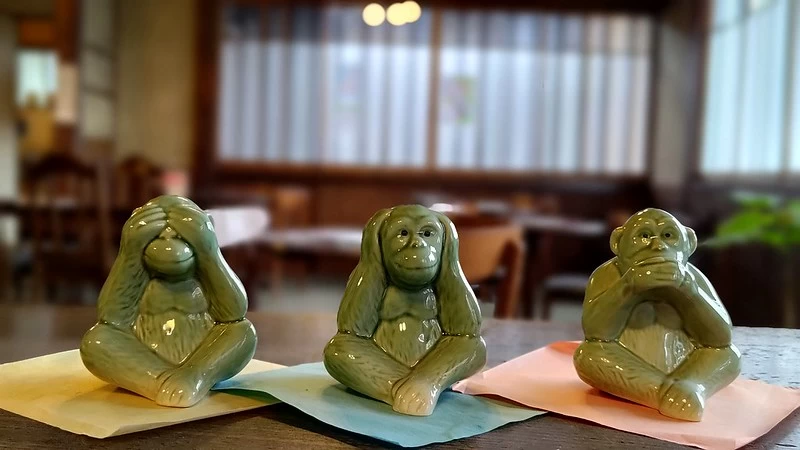
The Three Wise Monkeys at Nikko Toshogu Shrine embody three of the four teachings from The Analects. This raises an intriguing question: why was the fourth monkey left out, leaving us with this famous trio?
While historical records offer no definitive answer, several fascinating theories suggest why the motif evolved into the Three Wise Monkeys we know today.
*Image
To put it simply, the fourth monkey may have been omitted because it was deemed "inappropriate." One theory relates to the number four itself. In Japan, the number four is a homophone for "death" (both pronounced as shi), making it an unlucky number to be avoided in sacred architecture.
Another explanation involves the specific meaning of the Four Monkeys. As mentioned earlier, the fourth figure often represents a warning against sexual impropriety. This message may have been considered unsuitable for the hallowed grounds of Nikko Toshogu Shrine. Since the shrine enshrines Tokugawa Ieyasu as a deity, such an explicit admonition might have been viewed as irreverent or out of place.
*Image
Let’s explore the history behind the Three Wise Monkeys at Nikko Toshogu Shrine. These carvings are designated as an Important Cultural Property and are highly regarded for their profound historical value.
In 1999, they were recognized globally when the site was inscribed as a UNESCO World Heritage site under the title Shrines and Temples of Nikko. As one of Japan’s most iconic spiritual landmarks, the shrine draws visitors from all over the world, making its famous Three Wise Monkeys a globally recognized symbol of Japanese artistry.
Let’s explore the history behind the Three Wise Monkeys at Nikko Toshogu Shrine. These carvings are designated as an Important Cultural Property and are highly regarded for their profound historical value.
In 1999, they were recognized globally when the site was inscribed as a UNESCO World Heritage site under the title Shrines and Temples of Nikko. As one of Japan’s most iconic spiritual landmarks, the shrine draws visitors from all over the world, making its famous Three Wise Monkeys a globally recognized symbol of Japanese artistry.
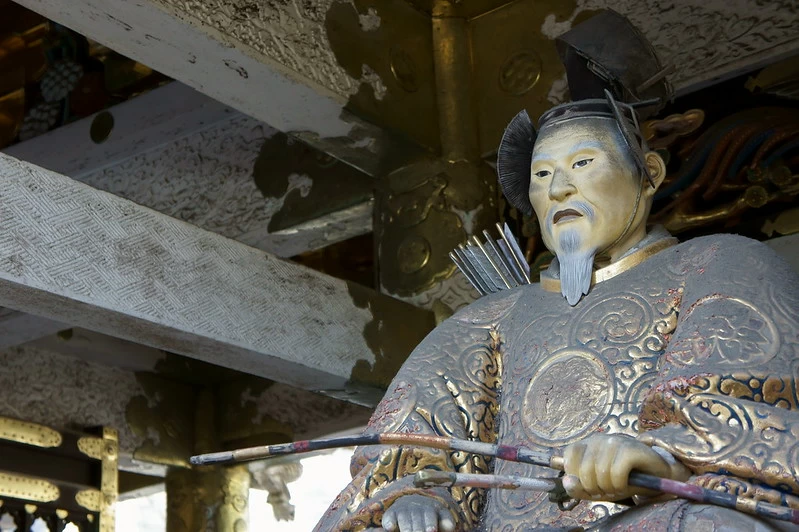
Who exactly was the artist behind the Three Wise Monkeys at Nikko Toshogu Shrine? The name most frequently associated with these carvings is Hidari Jingoro, a legendary master sculptor of the Edo period. He is also famously credited with creating the Sleeping Cat (Nemuri-neko) found at the same shrine.
However, a fascinating mystery surrounds this figure. Because works attributed to Hidari Jingoro span nearly 300 years,many believe the name was not that of a single man. Instead, it may have been a collective pseudonym for the most elite master carvers across Japan.
The construction of Nikko Toshogu Shrine was a project of unprecedented scale, reportedly involving as many as 200,000 craftsmen. While a sculptor named Hidari Jingoro may have been among them, it is also possible that the legendary name was shared by several master artists of the time.
*Image
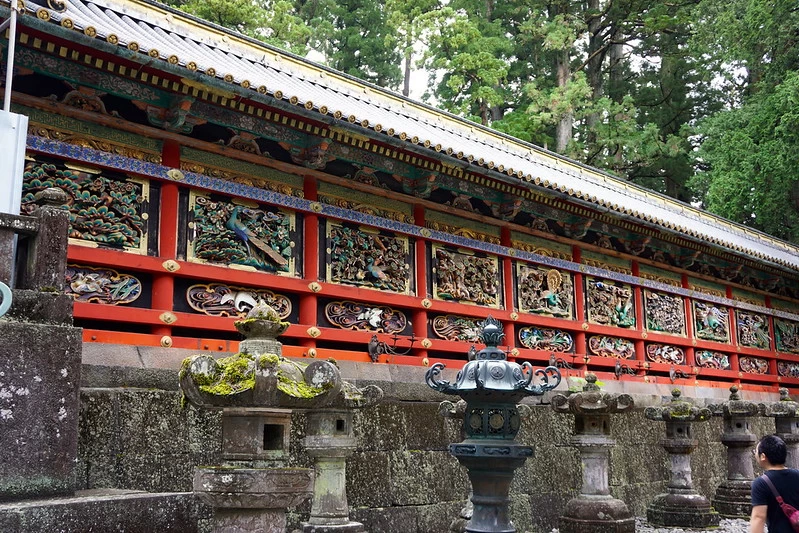
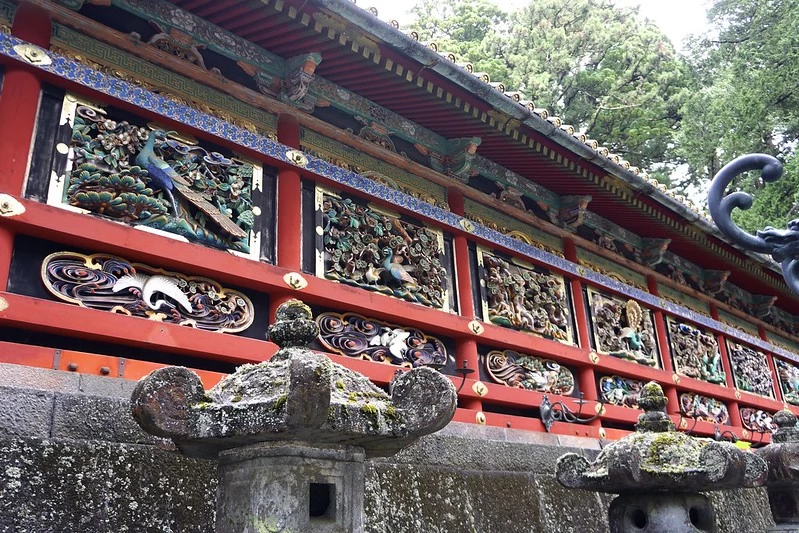
The famous Three Wise Monkeys at Nikko Toshogu Shrine are, in fact, only one part of a larger masterpiece. If you look closely at the Sacred Stable (Shinkyusha), you will notice a series of intricate monkey reliefs that encircle the entire building.
So, what is the significance of these carvings beyond the famous "See no evil, hear no evil, speak no evil" message? What story is being told by the other monkeys that surround the Sacred Stable (Shinkyusha)?
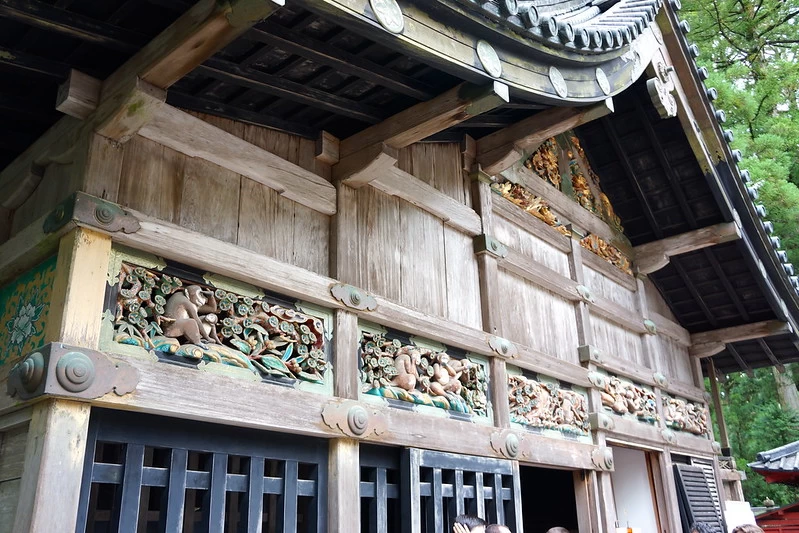
The series of eight monkey carvings that encircle the Sacred Stable (Shinkyusha) at Nikko Toshogu Shrine is more than just decoration. When viewed in sequence, these panels reveal a profound life story, with each stage representing a different chapter of human existence. The iconic Three Wise Monkeys, for instance, depict the innocence and lessons of childhood.
So, what exactly does this journey through life look like? Let’s explore the meaning behind each of these eight masterfully crafted panels.
*Image
Just like humans, the journey of life begins with infancy. When you visit the Sacred Stable (Shinkyusha) at Nikko Toshogu Shrine, first look for the carving depicting a baby monkey. This panel marks the very beginning of the story. You will see a young monkey sitting tenderly beside its mother, a scene that represents the start of life’s long journey a baby monkey.
On the left side of this panel, look for the mother monkey gently cradling her young infant. Beside them, you will see a loquat tree heavy with ripening fruit. These abundant loquats are believed to symbolize a heartfelt wish for the young monkey’s future to be rich and fruitful.
Notice how the mother monkey shades her eyes with one hand, gazing far into the distance while protecting her child. This gesture represents her looking toward her offspring’s future. Together with the nearby fruit, this scene beautifully captures a parent’s hope for a bright and prosperous life ahead for their child.
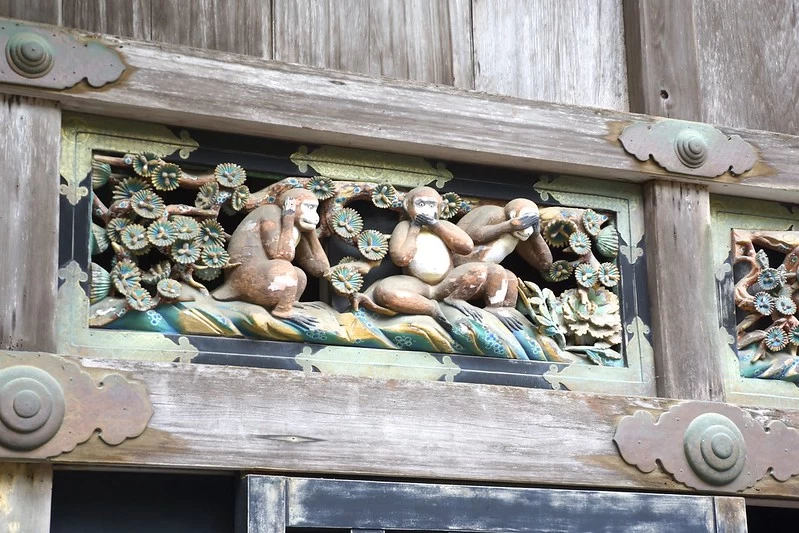
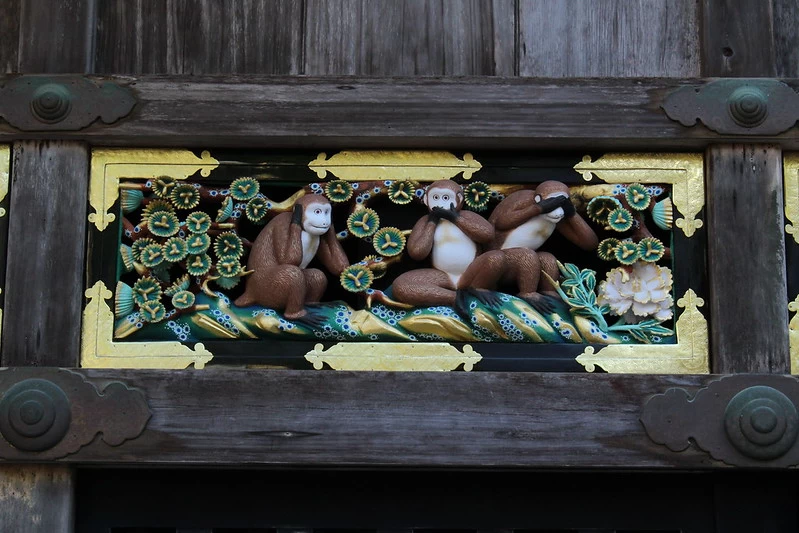
Next, you will encounter the world-famous Three Wise Monkeys. While they are best known for the phrase "see no evil, speak no evil, hear no evil," this panel actually represents the childhood stage of life.
Children are naturally curious and eager to explore everything. With this in mind, take a closer look at the three young monkeys. This scene depicts them learning a vital lesson: to avoid seeing, speaking, or hearing "evil" during their most inquisitive years.
The Three Wise Monkeys depict children growing up while learning to "see no evil, speak no evil, and hear no evil." In this sense, they symbolize the ideal of focusing only on good things to grow into a virtuous adult.
When you remember that the monkeys in this panel represent children, another interesting interpretation becomes clear. The fourth teaching often found in other cultures—"do no evil"—may have been considered unsuitable for this early stage of life. This is often cited as a reason why the motif at Nikko Toshogu Shrine remained the Three Wise Monkeys rather than four.
*Image
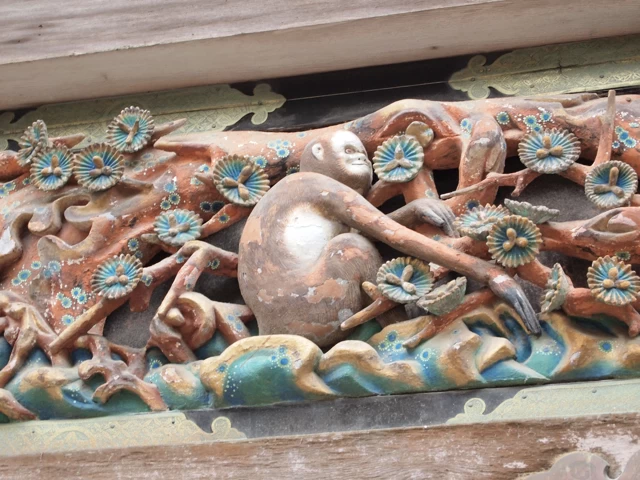
Next to the Three Wise Monkeys, notice the carving of a a single monkey sitting beneath a large tree. While the previous panels depicted multiple monkeys together, this shift to a solitary figure is believed to symbolize independence.
As the monkey begins its life on its own, this scene represents the stage of youth or early adulthood. For many, this may call to mind that pivotal moment in human life—graduating and stepping out into the world to start a career or higher education.
In this scene, notice the monkey gazing into the distance with a uniquely pensive expression. Unlike the first panel where it was under its mother’s protection, the monkey now looks ahead on its own, appearing as if it is gathering the strength to stand and forge its own path.
Observe the monkey as it sits with its back toward us and a serious, focused look on its face. This posture beautifully captures the complex emotions of youth—a blend of hopeful anticipation and the quiet uncertainty that comes with facing the future alone.
*Image
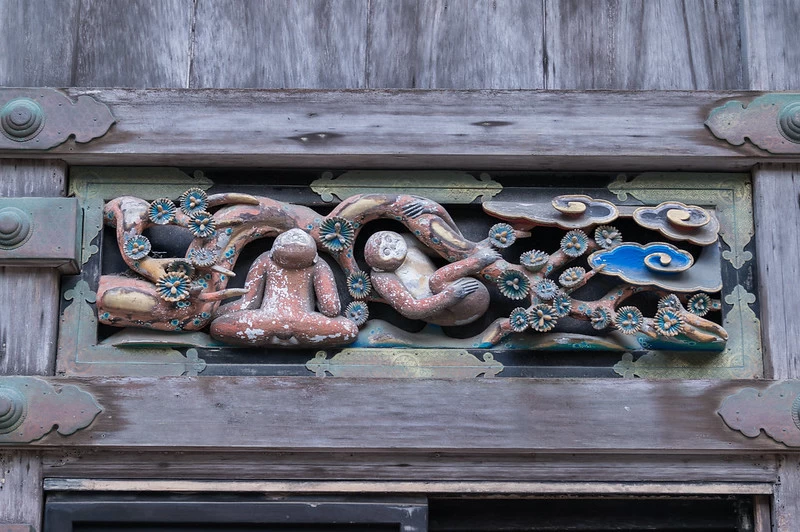
In the next panel, look for the two monkeys together—a shift from the solitary figure we saw before. Notice how both monkeys are gazing upward.
Pay close attention to the blue cloud painted to the right of the monkeys. This represents Seiun (blue clouds), a traditional symbol of high aspirations and the ambition to achieve great things. This scene is believed to depict the stage of life when a person transitions from youth into adulthood, looking toward a bright and ambitious future.
The blue cloud represents Seiun no kokorozashi, a term associated with high aspirations and the desire to achieve success in life. The phrase Seiun no kokorozashi refers to the ambition often held by young people who set their sights on great goals. In this scene, notice how the monkeys appear to be taking their first steps toward the future, guided by these powerful aspirations.
Look closely and you will see that the single monkey from the previous panel has now become two. This suggests that the monkey has found a companion to walk its chosen path together. This panel beautifully depicts the stage of life where friends or partners share lofty ambitions and strive toward their goals side-by-side.
*Image
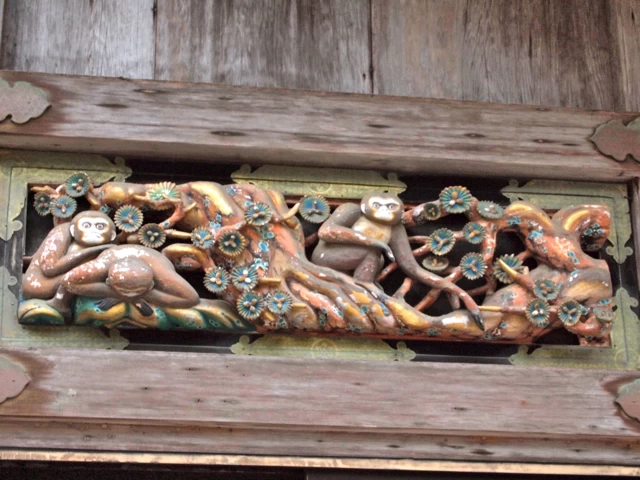
Life does not always unfold as smoothly as we hope. Even for those with high aspirations and dreams of success, the path is rarely straightforward. No matter how successful a person may become, the journey inevitably includes moments of failure and hardship.
In the next panel, notice the monkey grasping the edge of the frame and peering anxiously downward. This posture suggests the monkey has reached a cliff’s edge in life, representing a moment of deep setback.
However, look closely at the monkey standing beside it. With a hand placed gently on its companion’s back and eyes looking straight ahead, this figure offers comfort and support. It serves as a powerful reminder that even in our darkest moments, the encouragement of a friend can help us find the strength to move forward.
In this scene, a large cliff is carved in the center, separating the monkeys. While the two monkeys from the previous moment remain on the left, a third monkey appears on the right. With its foot planted firmly on the edge and its eyes fixed on the distant horizon, it seems poised to leap across the gap and forge ahead.
By depicting these three states—the monkey feeling defeated, the friend offering comfort, and the figure ready to leap forward—the carving represents the strength to overcome life’s greatest setbacks. It serves as a moving reminder that to find the courage to take that next step, the heartfelt encouragement of a friend is often the most vital support of all.
*Image
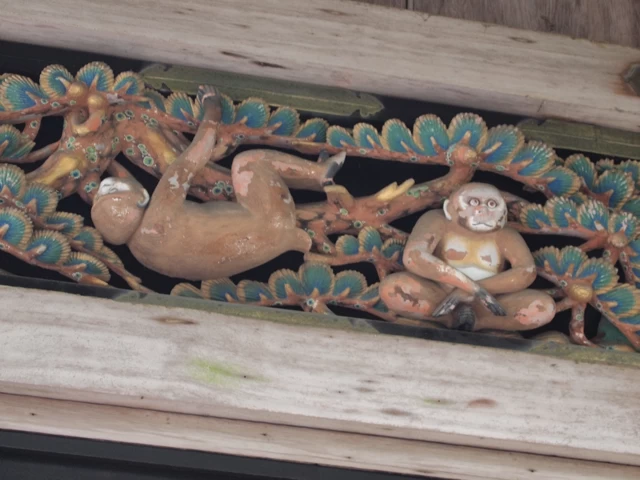
In the next panel, two monkeys appear once again. Notice the monkey on the right sitting down, seemingly lost in thought. Meanwhile, the monkey on the left climbs a tree, not even glancing back. This scene feels strikingly different from the earlier moments of mutual encouragement.
In fact, this panel is believed to capture the uncertainties of love. It appears the monkey on the right has fallen for the one on the left. Looking at its contemplative posture, one can imagine the monkey is wrestling with its feelings, perhaps hesitating to confess its love.
These two monkeys are believed to represent a male and a female. The monkey on the right appears to be struggling with feelings it cannot yet express, suggesting a relationship that is still in its early, tentative stages.
Love rarely begins with instant intimacy. Instead, it often starts with these very moments—hesitant, uncertain, and beautifully awkward. The scene serves as another vital chapter in the lifelong journey depicted by these carvings, capturing the delicate beginning of a new bond.
*Image
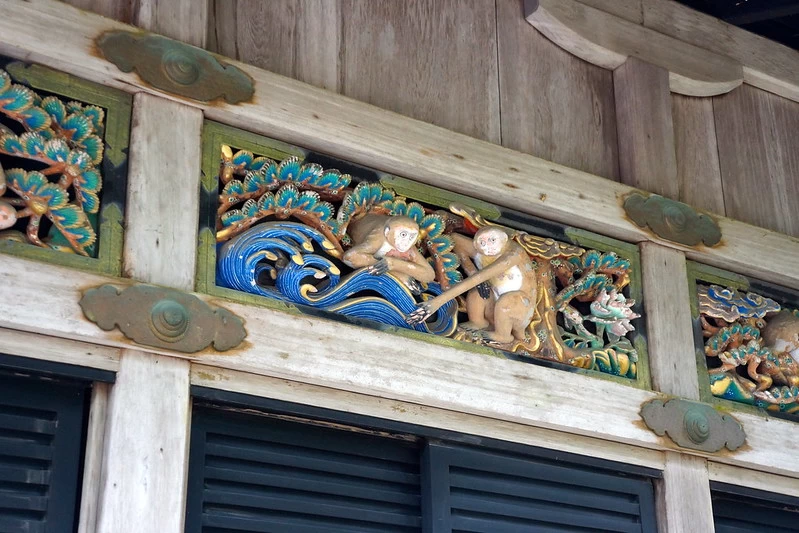
In the next panel, the two monkeys are shown leaning close together. It appears that the pair have grown closer and are now united as partners in life. Standing side by side, they face forward with a sense of shared purpose.
However, notice the blue waves carved directly in front of them. These represent the stormy seas of life. While they have found happiness together, the scene suggests that their journey ahead will not always be calm, with new challenges waiting to be faced as a team.
However, look closely at the waves and you will notice that the two monkeys are grasping them with their hands. This subtle detail is said to symbolize their shared determination to overcome the stormy seas of life.
Perhaps because they are no longer facing these challenges alone, the monkeys’ expressions appear gentle yet resolute—as if they are ready to navigate whatever lies ahead, side by side.
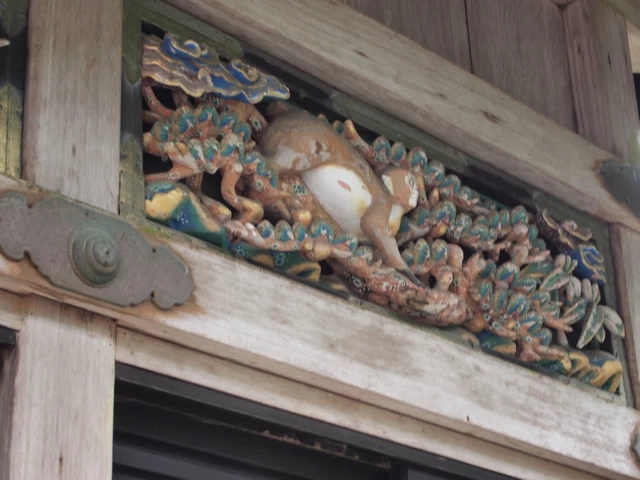
In the final panel, a single monkey is depicted. At first glance, you will notice its belly is prominently rounded, suggesting that the monkey is pregnant. This scene marks the transition into motherhood, representing the beginning of a new life after marriage.
By showing the continuation of life, this panel beautifully concludes the story of the monkeys—yet it also points back to the very first scene of the baby monkey and its mother, reminding us that the circle of life continues.
The carving of the pregnant monkey concludes the life story depicted around the Sacred Stable at Nikko Toshogu Shrine. From here, the cycle returns to the very first panel of the mother and her baby, suggesting that each new life will embark on this same journey once again.
As you walk around the building, you will see that these carvings form a single, continuous narrative that goes far beyond the famous Three Wise Monkeys. When visiting Nikko Toshogu Shrine, be sure to view all eight panels to experience the full, profound story they tell.
*Image
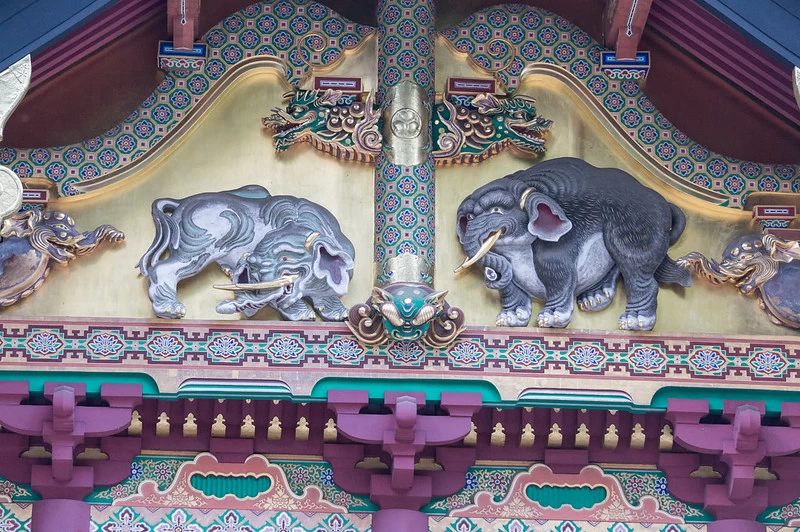
The Three Wise Monkeys are not the only famous carvings at Nikko Toshogu Shrine; the Sleeping Cat is equally renowned. In fact, the shrine is filled with countless intricate carvings.
Even the life-story panels surrounding the Sacred Stable include a total of 16 monkeys, yet this represents only a tiny fraction of the whole. Astonishingly, Nikko Toshogu Shrine is home to a staggering total of 5,137 carvings throughout its grounds.
With a staggering 5,137 carvings, it can be difficult to see every detail within the vast grounds of Nikko Toshogu Shrine. While the famous Sleeping Cat is a must-see, monkey motifs can also be found in several places beyond the Sacred Stable.
Some of the most well-known examples appear at the Five-Story Pagoda and Honjido Hall. Try comparing these monkey carvings with the Three Wise Monkeys at the Sacred Stable to discover the unique charm of each.
*Image
At Nikko Toshogu Shrine, restoration work is carried out roughly every ten years. The shrine’s renowned brilliance and lavish colors are carefully preserved through these ongoing efforts.
A major project known as the Heisei-era Great Restoration was completed in 2017, marking the first large-scale restoration in nearly half a century. During this work, faded sections were repainted and weathered wooden structures were carefully repaired.
However, when the newly restored Three Wise Monkeys were finally unveiled, they sparked widespread discussion, with many visitors wondering: did their faces actually change?
Nikko Toshogu Shrine is the shrine where Tokugawa Ieyasu was enshrined as a deity. As a symbol of the Tokugawa shogunate’s immense power and prestige, the shrine was adorned with lavish decorations, reportedly requiring as many as 200,000 skilled craftsmen to complete its intricate carvings.
However, since Nikko Toshogu stands outdoors, it is constantly exposed to the elements, from harsh sunlight to wind and rain. To preserve its original beauty, the shrine—including the famous Three Wise Monkeys—has undergone frequent restoration throughout its history.
In the days before photography, such as the Edo period, it was nearly impossible to perfectly replicate the original faces once the paint had worn away. Consequently, it is said that the expressions of the monkeys have subtly evolved with each restoration over the centuries.
The latest major restoration aimed to recreate the appearance of previous repairs as accurately as possible, using detailed sketches from the earlier project as reference. However, because the process involves stripping away the old paint and repainting the carvings from scratch, the individual brushstrokes of each craftsman make it impossible to produce an exact replica.
In addition, colors restored close to their original state often appear brighter and more vivid than the weathered tones visitors were used to seeing. This difference in color intensity is one reason why some people felt the faces of the Three Wise Monkeys looked slightly different after the restoration.
Although the monkeys’ expressions have subtly changed through repeated restorations, these variations fall within accepted conservation practices and do not diminish their historical or cultural value.
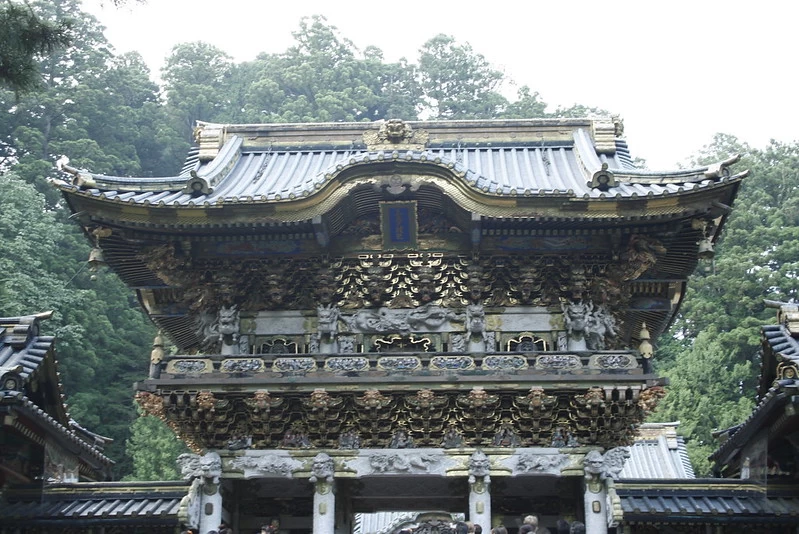
Nikko Toshogu Shrine offers countless highlights, and visiting iconic spots such as the Yomeimon Gate and the Three Wise Monkeys alone provides a rich sightseeing experience. However, there are several additional nearby attractions that are well worth exploring to deepen your visit.
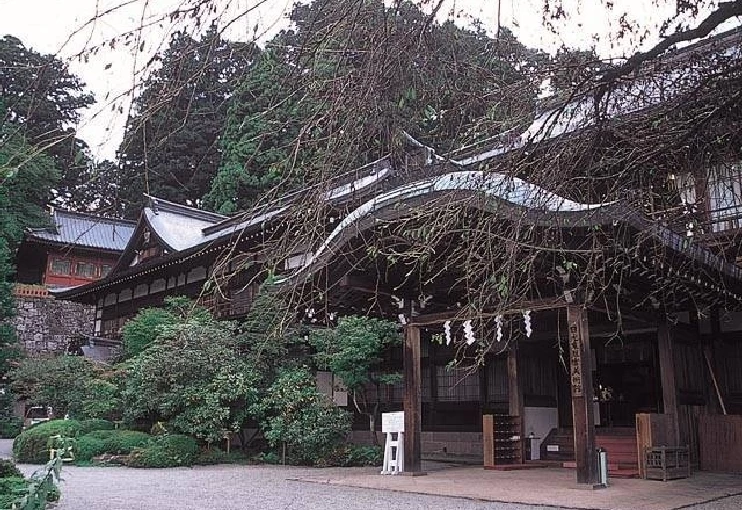
First among these is the Nikko Toshogu Museum of Art. The museum is housed in Choyokaku, the former administrative office of Nikko Toshogu Shrine, and has been open to the public since 1995. The building itself is an atmospheric example of modern Japanese-style architecture from the early Showa period, offering a glimpse into the refined aesthetics of the era.
The Nikko Toshogu Museum of Art displays masterpieces by leading Japanese painters, including the renowned Yokoyama Taikan. Beyond the framed works, the building itself is a masterpiece; its original interior furnishings—such as sugido (cedar sliding doors) and fusuma (sliding partitions)—are beautifully painted, allowing visitors to experience the entire structure as a unified work of art.
Since its completion, the building has been highly regarded as one of Japan's finest examples of modern Japanese-style architecture. Inside, visitors can also view the Jodan-no-Ma (Upper Chamber), a formal room once used to receive state guests and dignitaries, showcasing the craftsmanship of the era.
Nikko Toshogu Museum of Art

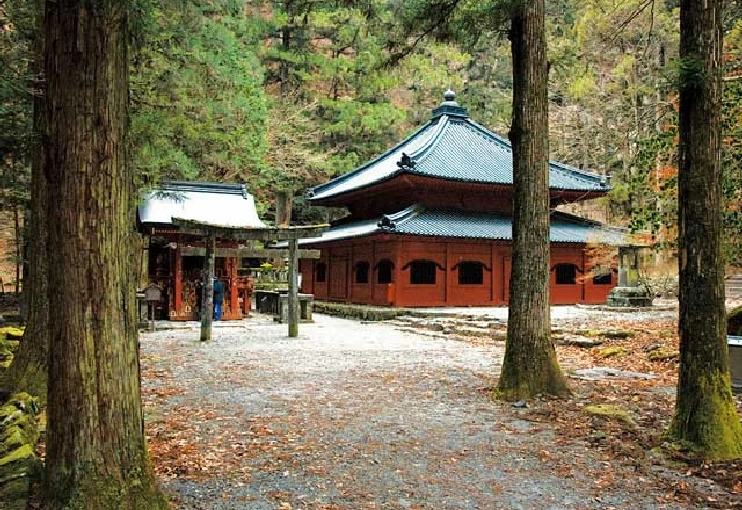
Rinnoji Temple is a temple complex located in the Nikko mountains. Until the early modern period, Rinnoji, Nikko Toshogu Shrine, and Futarasan Shrine were collectively known as Nikko-zan. Founded in 766 by the monk Shodo Shonin, it became a major spiritual center in the Kanto region during the Kamakura period. In the Edo period, it received strong patronage from the Tokugawa shogunate, leading to the construction of Nikko Toshogu and Taiyuin, the mausoleum of the third shogun Tokugawa Iemitsu. Its influence can still be felt today.
Sanbutsudo, the main hall of Rinnoji Temple, is the largest wooden structure in eastern Japan. Although the temple was founded in the Heian period, the current hall was rebuilt in 1645 by the third shogun, Tokugawa Iemitsu. It is designated as an Important Cultural Property and is part of the UNESCO World Heritage Site.
Nearby, the Rinnoji Treasure House (Homotsu-den) displays a large collection of historical materials from Nikko as well as valuable treasures connected to the Tokugawa family. The historic buildings throughout the temple grounds also reflect the grandeur of Nikko that has endured since the Edo period, with Sanbutsudo, the main hall of Rinnoji Temple standing as a central highlight.
Rinnoji Temple
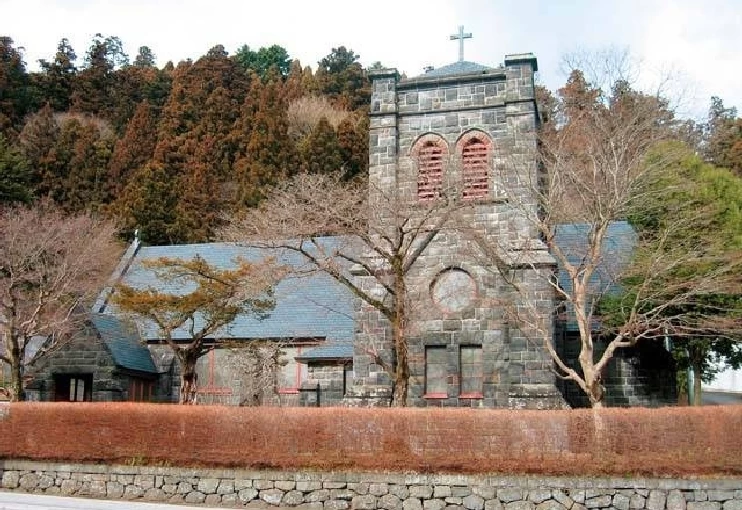
Nikko Shinko Church (The Anglican Church in Japan) stands near the West Approach to Nikko-zan. Nikko became a popular summer resort during the Meiji period, and the area’s first Western-style church was built here in 1899.
The church was designed by James McDonald Gardiner, a missionary and architect. The present building was completed in 1916 and is now designated as a Tangible Cultural Property of Tochigi Prefecture. Today, it remains a well-preserved landmark that reflects Nikko’s history as an international summer retreat.
The interior features beautiful stained-glass windows that fill the church with soft, solemn light. During the summer, concerts are held regularly, and many visitors gather to enjoy the rich music. As the church remains an active place of worship, the interior may be closed during services.
Nikko Shinko Church (Anglican Church in Japan)
*Image
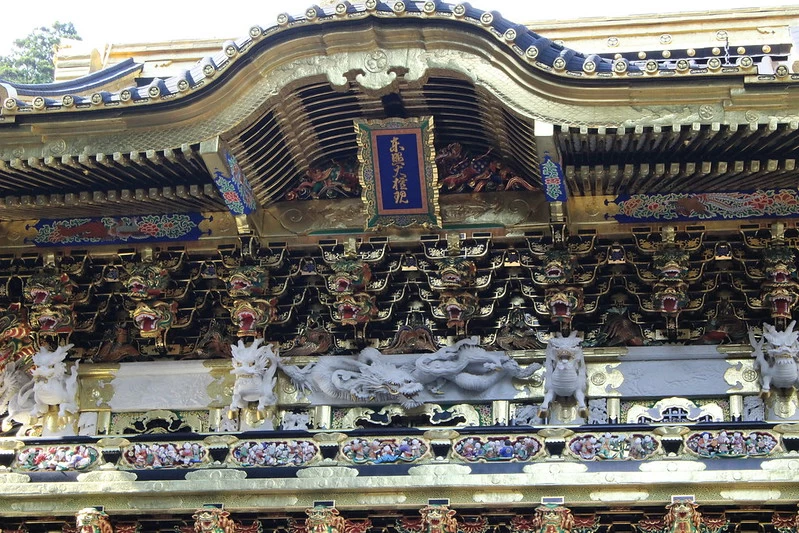
Nikko Toshogu Shrine offers many highlights, including the world-famous Three Wise Monkeys. Its ornate buildings and intricate carvings reflect the grandeur of the Tokugawa shogunate. Take time to explore the many carvings and historic buildings throughout the shrine grounds.
Was it helpful? Please try using it when traveling or going out.
Article planning/supervision:Tabiiro Editorial Department Omori
writer:よしぷー
Updated every Monday: Total number of views for 30 days


Coin lockers at Disneyland! Also what to do when you don't have a place or space to leave your belongings!
2024/11/25


Summary of Luggage Lockers (Coin Lockers) at Yokohama Station! Where Can You Find Free or Affordable Options?
2025/01/31

12 Must-Visit Okinawa Souvenir Shops for Awamori, Perfume, and Ryukyu Glass
2026/05/04


Top 10 Souvenirs to Buy at Shin-Yokohama Station — Best Spots for Cute Treats
2026/05/05


Exploring Okinawa by Campervan: A First-Timer’s Guide
2026/05/15
Nikko Toshogu Museum of Art
9 minutes Bus ride from JR Nikko Station (JR Nikko Line) or Tobu-Nikko Station (Tobu Nikko Line), A short walk from Omotesando Bus Stop
Rinnoji Temple
5 minutes Bus ride from Nikko Station, 5-minute walk from Shinkyo Bus Stop
Nikko Shinko Church (Anglican Church in Japan)
7 minutes Bus ride from JR Nikko Station (JR Nikko Line) or Tobu-Nikko Station (Tobu Nikko Line), A short walk from Nishisando Bus Stop